
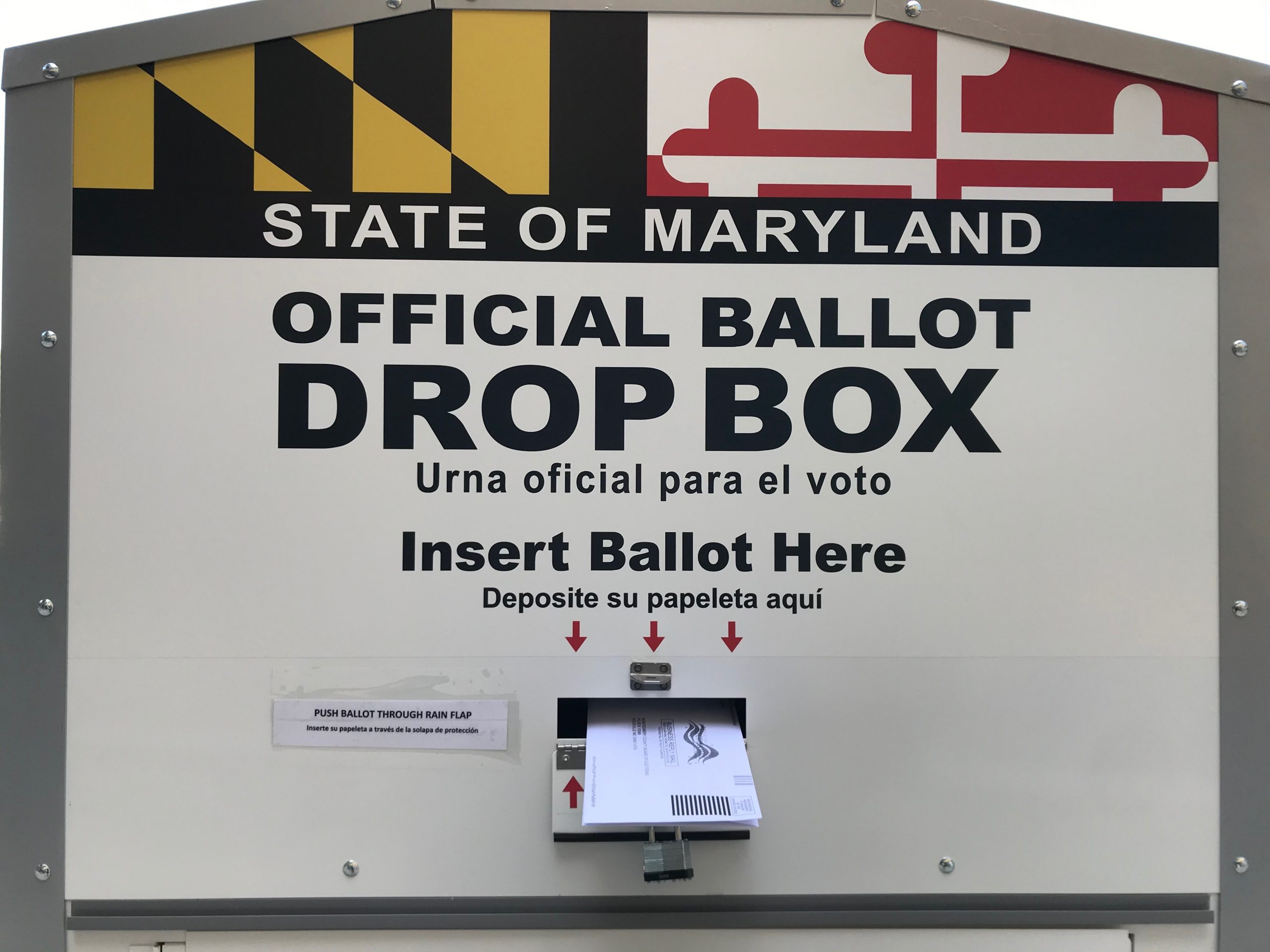
Voter initiative aims to expand electorate and boost teen participation in civic affairs
ANNAPOLIS–A push to expand the electorate is gaining momentum in Maryland. The effort to lower the voting age in Maryland to 16 years of age is part of a national student-led initiative advocating for youth suffrage.
“By the age of 16, our cold cognition capabilities are fully developed,” said Anya Kleinman, a 17-year-old senior at Richard Montgomery High School and co-founder of Vote16MD, the local chapter of Vote16USA. “Instead of drawing an arbitrary line at the age of 18, let’s root our voting age in something that’s scientific.”
Kleinman founded the state chapter in 2024 with Vanessa Li, a 17-year-old member of the group’s National Youth Advisory Board from St. Mary’s County. Together, they advocate for 16- and 17- year olds’ right to vote in local elections across Maryland.
“Teaching those kids while they’re still young, while they’re still at home, when they don’t have that many responsibilities [is important], so that when they’re adults they are set up for a life of habitual voting,” said Li.
Twelve years ago, Takoma Park, Md. became the first municipality in the United States to grant 16- and 17-year-olds the right to vote in mayoral and city council elections, according to a 2023 mayoral proclamation. Since then, nine other cities and municipalities in Maryland have followed suit.
The Maryland Municipal Corporations Amendment, passed in 1954, granted municipalities home rule, giving local governments autonomy to enact their own local laws. An amendment to the Maryland Constitution allows city and municipal election boards to expand voting eligibility beyond state requirement, such as lowering the voting age to 16 or allowing green card holders to vote.
Michael Hanmer, the director of University of Maryland’s Center for Democracy and Civic Engagement, said local elections can play a larger role in daily lives than some may realize. Public school systems, rent costs and community amenities, like local parks and garbage pickup, are all the direct result of local governments’ decisions, he said.
Still, data from a 2022 CDCE/Washington Post poll shows that more than half of Maryland’s registered voters feel strongly that the voting age should remain at 18. Only 11% of voters feel strongly that the voting age should be lowered.
On the other hand, it strikes others as a good idea. Laura Hall visited the state capital from her home in Atlanta, Ga. last week and paused to talk to reporters.
“Everybody gets excited about the every-four-years presidential election. I mean, yes, it’s important. But, most things start local, and those are really where change is made,” said Hall.
Li and Kleinman agreed that communities that have implemented this change are already seeing the effects.
Takoma Park’s 2020 general election saw record turnout with nearly 70% of 16- and 17- year old registered voters casting their ballot in the election, the highest turnout of any age group.
Since founding Vote16MD in 2024, Li and Kleinman helped influence electoral boards in College Park and Berwyn Heights to lower age-based voting restrictions. These municipalities join Takoma Park, Chevy Chase, Cheverly, Hyattsville, Greenbelt, Mount Rainier, Riverdale Park and Somerset, each of which adopted the change independently. Now, the pair are focusing their efforts on Gaithersburg.
Even with its successes, Vote16MD has also sparked pushback. Kleinman noted that most of the initiative’s criticism comes from adults who believe teenagers are unfit to find and evaluate accurate news, viewing youth-focused platforms as illegitimate. These concerns mirror those that were raised when the federal government lowered the voting age from 21 to 18, she said.
The 26th amendment to the U.S. Constitution, ratified in 1971, established the standard minimum age of 18 to vote in state and federal elections.
“Degradation of trust in establishment news and a shift to more spurious news on social media is a big problem. But, it’s a societal problem, it’s not a problem with 16- and 17-year-olds,” Kleinman said.
Maryland already has high voter registration rates among young people with 63% of 18-year-olds registered to vote, according to The Civics Center. Vote16MD and several independent municipalities are interested in continuing this trend. In fact, the Maryland State Board of Elections launched an annual statewide voter registration contest this year to encourage Maryland high school seniors to become involved.
Even in cities where Vote16MD has not been implemented, 16- and 17-year-olds can pre-register to vote in the 2026 primary elections.
Today’s 16- and 17-year-olds are on the cusp of adulthood and will pay the price for decisions made by today’s local lawmakers, said Kleinman. Hanmer said that 16- and 17-year-olds should take advantage of the opportunity to be civically active in their local communities.
“Young people are going to bear the brunt of responsibility…in regards to a lot of decisions that lawmakers are making right now,” said Kleinman.