
Editor’s Note: This week, two Capital News Service reporters were ousted from immigration court. It was an incident that drew national attention — and condemnation from advocates for press freedom and for people concerned about immigration enforcement under the Trump administration. Now, three days after our reporters were removed by local officials in Hyattsville, they’ve been welcomed back by higher-ranking federal officials. See the full update on the story here.
For two journalists covering the immigration court in Hyattsville, Tuesday started as a typical day. They walked in for Judge Dinesh Verma’s morning hearings, and identified themselves as members of the press, as they had in different immigration courtrooms for the past few weeks.
But this time, Verma had the reporters escorted from the courtroom.
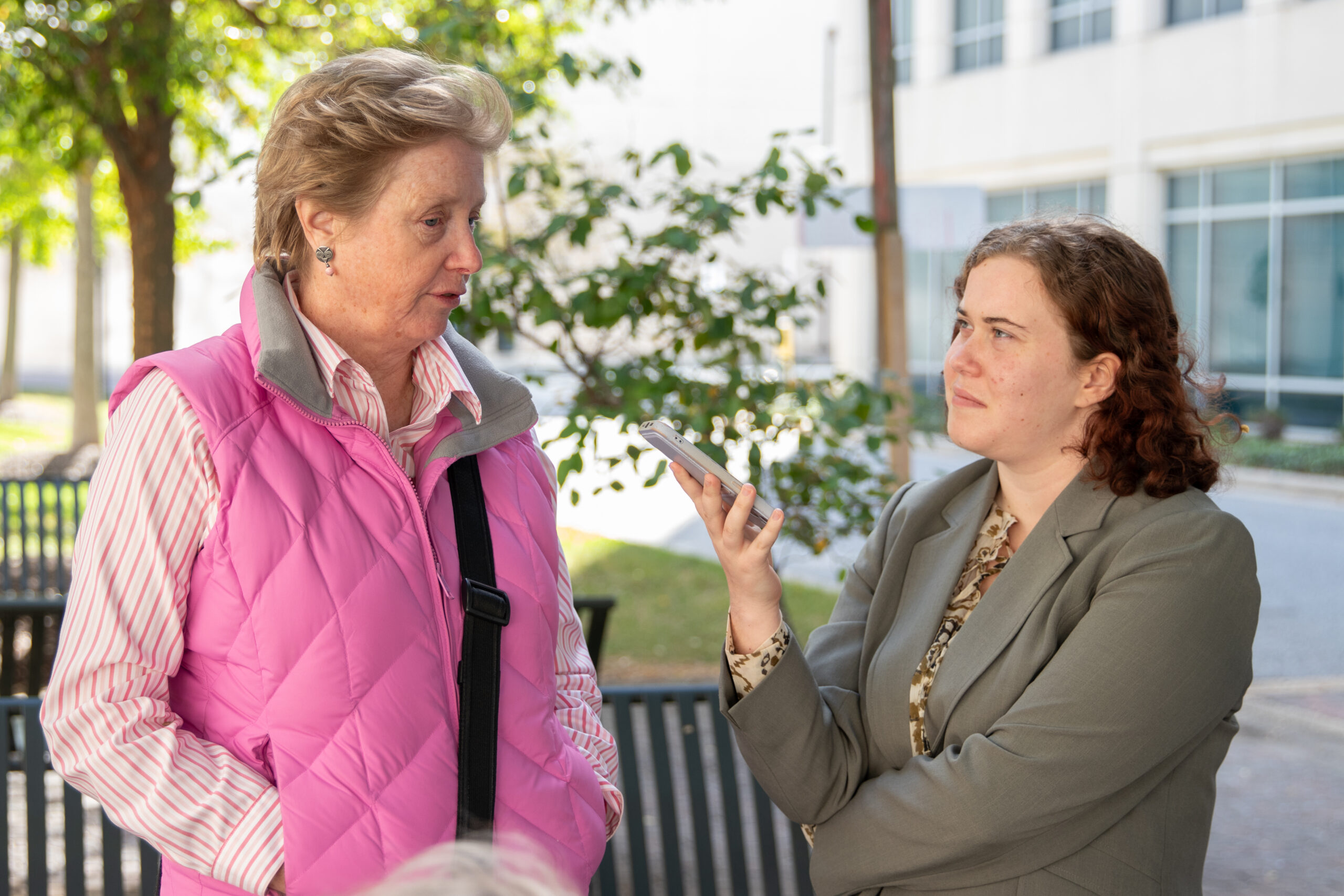
Capital News Service reporters Ruby Siefken and Lillian Glaros were working on a story about a typical day at the Hyattsville immigration court. But on Tuesday, an official at the courthouse said they wouldn’t be allowed in without “clearance” from the Executive Office for Immigration Review, which sets policies for immigration courts across the country.
Siefken and Glaros were confused, but they reached out to EOIR’s spokesperson, Kathryn Mattingly. In response, they received a message that said Mattingly was furloughed until the end of the government shutdown.
That’s when they got caught up in red tape. Unable to contact the EOIR representative, Siefken and Glaros reached out to any person they thought might be able to help. The judge’s office sent them to the court administrator, who said it was out of his hands. Their editor, Christi Parsons, worked her way up the food chain in an attempt to find a solution, but has had no luck for three days.
“I was making a lot of phone calls,” Siefken said. “My ultimate goal was, I wanted to be in that courtroom. I wanted to figure out a way for me, Lillian, and any other reporter to be there.”
The barring of media from public courtrooms comes at a sensitive time for immigration proceedings in Maryland. The Trump administration has stepped up enforcement at every level, from arrests to legal review to deportations. Immigration court is where immigrants go to present their requests for asylum, attend status hearings, and answer notices to appear from the federal government.
Immigration Enforcement in Maryland Communities:
Explore our latest reporting
An EOIR manual that contains the office’s policy and practice guidance for immigration courts says that hearings are generally open to the public, although judges may limit access if sensitive information will be disclosed.
Hearings are also open to news media, according to the manual. But an EOIR fact sheet dated September 2025 says otherwise. According to the document, reporters must identify themselves upon arrival at court and coordinate their visit with the office.
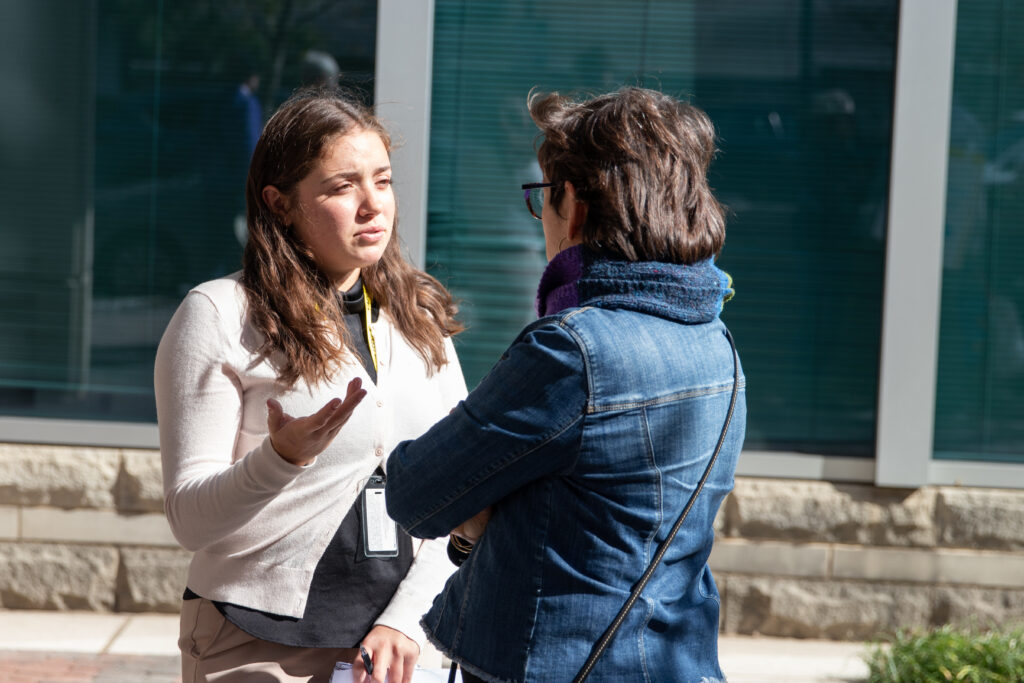
Capital News Service reporters hadn’t even heard of that policy. Glaros has visited the court at least four times over the past two months, sitting next to law students, court observers and other members of the public.
“I knew I had an obligation to identify myself when a judge asked,” Glaros said, “but I’ve never been removed for being a reporter. I’m also a member of the public.”
She said she’s never seen anyone thrown out or heard of something like that happening during multiple visits to the courthouse in September and October.
U.S. Sen. Chris Van Hollen (D-Maryland) stressed the importance of public access to the courts.
“The Trump Administration has repeatedly sought new ways to infringe on the rule of law and their Republican shutdown is no exception,” he said, in a statement to CNS. “As long as immigration courts are operating, there must be transparency and that includes access for the public and the press. It is essential for ensuring the rights of all who come before these courts are upheld.”
U.S. Rep. Johnny Olszewski (D-Maryland) fears the refusal is part of an alarming trend.
“This appears to be another dangerous consequence of this reckless shutdown — as well as the administration’s ongoing assault on our free and independent press,” he told CNS in a written statement. “I urge the DOJ to find a way to accommodate journalists who have a right and responsibility to observe court proceedings.”
Advocates for freedom of the press are also concerned.
“It’s really troubling to see reporters removed from these immigration proceeding without any apparent reason or recourse. The law is pretty clear that immigration courtrooms are generally open to the public and that does include the press,” said Renee Griffin, a staff attorney at the Reporter’s Committee for Freedom of the Press. “Blocking access like this really prevents important news gathering on these immigration proceedings that are happening all across the country every day.”
Siefken and Glaros were removed from the Hyattsville courthouse Tuesday morning, after Verma asked the reporters if they were members of the media.
They’d been asked this question on previous visits to different courtrooms around the building. Each time, a judge acknowledged their answer and went on with court business. On Tuesday, Verma asked a court employee to escort the reporters to the court’s information office.
An employee there told the reporters they needed approval from Mattingly to be at court. He gave them two email addresses and a phone number.
Siefken asked if she could return at 1 p.m. to watch more hearings. The first employee told her she would need permission first.
The phone number, the reporters found later, was for EOIR’s general line. When they contacted Mattingly via email, they learned that she was unavailable for the foreseeable future.
The reporters contacted the court’s information office again, to no avail. Then, they contacted the judge’s legal assistant, who again referred the reporters to Mattingly. Then the court administrator, Niel Andrade joined the call. They had to reach out to the official spokesperson, he said. There was no other way to get the necessary permissions.
Siefken told Andrade that Mattingly was not working, because of the shutdown. “If you can’t get through to them, we can’t help you any other way,” he told her.
On Wednesday, the reporters’ editor at CNS contacted the court and EOIR in an attempt to work out an accommodation. The court was unwilling to help, and she wasn’t able to get a response from EOIR.
For now, it appears that the government is unwilling to provide the reporters with any recourse. CNS will be unable to visit the Hyattsville immigration court, at least until the shutdown ends.
But Glaros and Siefken don’t plan to stop reporting about the courthouse. After all, they already have several weeks’ worth of reporting in their notebooks.
You must be logged in to post a comment.