
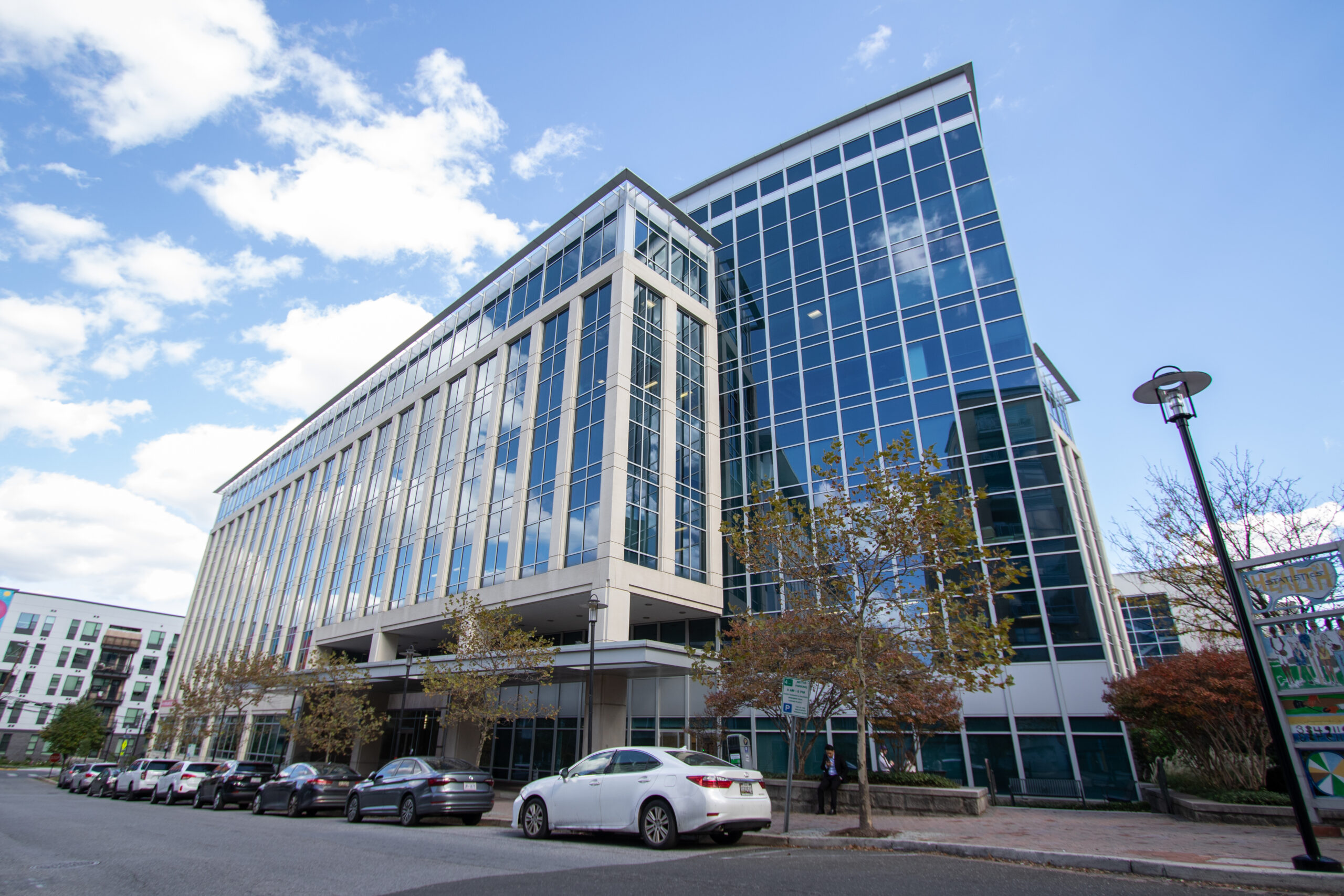
HYATTSVILLE–There’s no sign on the high-rise office building to indicate it houses the Hyattsville Immigration Court. It looks like all the other office buildings on this commercial strip not far from the Mall at Prince George’s.
But it’s a place of life-changing decisions nonetheless. Some people come here and win appeals for asylum or an extension of their residency in the U.S. Others leave unsure of their future in the country.
“Have you seen ICE?” one man asked a passerby in Spanish on a recent day, hunched over a walker and clutching a folder of papers. He asked for help finding the right courtroom for his hearing, and he wanted to know if a man in a suit nearby was a lawyer. He said he didn’t have one.
It’s a common problem outside the Hyattsville court, where Capital News Service reporters have visited on multiple court days this fall, talking to people as they come and go.
Many of the respondents appear without lawyers. Many don’t feel comfortable speaking English.
Every day, respondents walk through the building’s sterile, white-washed hallways, where immigration policy meets the real life of Maryland residents. Thousands of people come through the Hyattsville Immigration Court every year. The backup of pending cases in this venue stood at around 21,000 during the fiscal year that ended in September, according to the Transactional Records Access Clearinghouse at Syracuse University.
During the same fiscal year, almost 8,000 new proceedings were filed in Maryland, slated for this court in Prince George’s County and its twin court in Baltimore, according to TRAC.
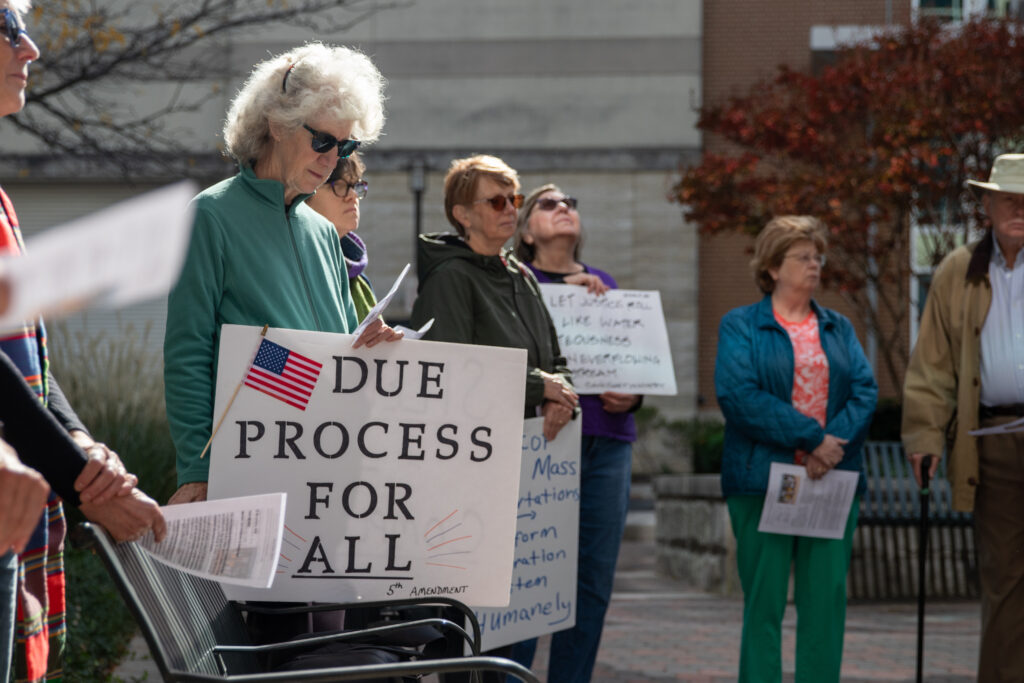
CNS reporters spoke with court observers who watch these cases play out on a regular basis.
“I think [immigrants are] very valuable in our culture and our economy. To me, they are most welcome, and certainly they’re making a huge economic contribution,” said Jim Bell, another court observer. “Them being here and them being in legal trouble bothers me a lot.”
Several weeks ago, Patricia Anne Murphy, a local resident who comes to observe court each week, saw one couple’s hearing was bumped from its original 8:30 a.m. start time. Murphy offered to get them food, but the husband responded by pointing to a sign stating that food and drinks aren’t permitted.
Murphy then offered to take them to lunch, but once again, she received a no. The pair was scared of ICE.
“His partner said, ‘We don’t dare go out, we’re afraid once we’re in here, we want to stay here until we’re done,’” Murphy said. “You know … talk about existential shocks of feeling this person’s fear.”
Immigration Enforcement in Maryland Communities:
Explore our latest reporting
Daily proceedings
The day typically begins with sessions in the 8 o’clock hour.
The courtrooms occupy the sixth and seventh floors of the office building. The hearings are held in rooms the size of a high-school classroom, made court-like by a long wooden judge’s bench against the back wall.
The judges have years of experience in the legal system, many in immigration law, on both sides of the issue. Some have worked with the Department of Homeland Security, others have worked with immigrant rights organizations.
A respondent’s table sits directly before the translator to allow for clearer communication with non-English speakers. One by one, respondents are called to the table and asked a series of questions.
“Can you please state your name?” they’re asked. “Is this the language you best understand?”
During several weeks of observing the courtrooms, CNS reporters have witnessed different answers to the questions: “Si,” “Oui,” “Yes,” “I don’t understand.”
Before long, the questions shift.
“Do you understand that you’re in the United States without permission?” a judge asked one recent day. “Do you understand the consequences of what will happen if you don’t return to court?”
Their families sit on church-like pews, with children playing on the floor nearby.
View this post on Instagram
Many respondents appear without legal representation. As of August in Maryland, that number is about 37 percent of respondents with pending cases and Maryland addresses, according to TRAC.
And in a time of shortage, some of the respondents may fall victim to lawyer scams.
“They hired quasi lawyers from other countries who claimed they were lawyers to help them fill out the asylum applications,” Bell said, of one story he heard at the Baltimore Immigration Court. “They had paid and trusted them to do it correctly. This didn’t happen.”
These quasi-lawyers are known as “notarios,” Bell said.

Families in the courtroom
But even within these stressful situations, there’s another emotion: joy. In one judge’s courtroom at the Hyattsville Immigration Court sits a large bin of stuffed animals, including a large shark with a zippered mouth.
Children, sitting with parents waiting to hear the date of their asylum hearings, dash over to the bin. One girl’s arm is swallowed by the shark as she runs over to her mother, pretending to be bitten by the shark. She’s joyous when a court employee tells her she can take a toy home.
In another courtroom, a pair of children play among the benches as their father’s hearing goes on. They giggle and crawl. At times, they appear to catch the judge’s attention, and their mother moves with haste to quiet them down.
They do not wear the same serious expressions as their parents, and, like passersby to the ordinary office building holding the court, they might not know or understand what happens here. For them, it is a new experience. New places to climb, new toys to take home.
What home will they take their new toys to? The homeland of their parents, or the home that they’ve lived in for much of their lives? It is here that those decisions are made.
You must be logged in to post a comment.