
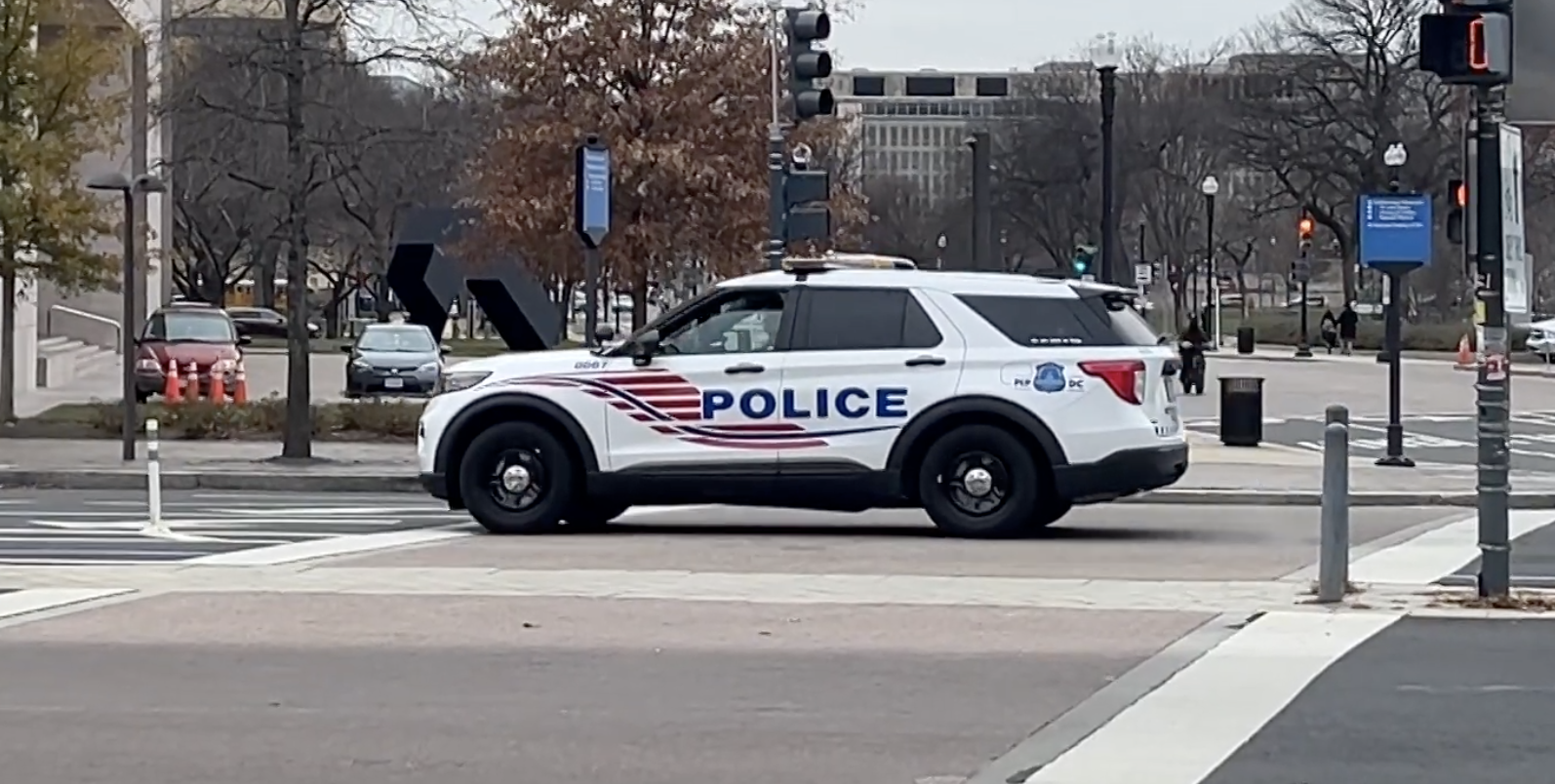
WASHINGTON – During a holiday season when teens are often out late for work, shopping and attending winter events, the District of Columbia’s expanded youth curfew, now extended through April 15, is shaping where young people can go and at what hours.
“My kids work jobs that have them out past midnight and waking up at 4 in the morning to get to school,” Ange Pirko, former teacher from the city’s Ward Four told the DC Council, referring to her students. “If you treat kids like criminals, they will act like criminals. They need support, not judgment.” Pirko opposed the curfew’s expansion and its effect on working teens.
The city says the policy is meant to “prevent disorderly juvenile behavior.” At the same time, the city is navigating an abrupt change at the top of the Metropolitan Police Department. Chief Pamela Smith resigned Tuesday, leaving questions about how MPD’s leadership transition will unfold as the curfew continues into spring.
At a press conference Tuesday, Mayor Muriel Bowser said she will nominate the department’s next chief, who must also be approved by the DC Council. She said she will begin by looking internally for a successor but is open to outside candidates.
“I’m obviously going to start first with the best police department in the nation,” Bowser said.
The resignation raised questions about who has final authority to declare curfew zones and whether any policies would change with a new head.
“The authority to issue Juvenile Curfew Zones is given to the chief of police. The next chief of police will have the same authority,” Tom Lynch, MPD Supervisory Public Affairs Specialist, said in an email to Capital News Service.
Under a citywide curfew that is in effect, youths under 18 are prohibited from being outside between 11 p.m. and 6 a.m. on weekdays.
On Dec. 2, the council extended the emergency curfew law, the temporary measure that authorizes the current restrictions while it considers the Juvenile Curfew Amendment Act, a permanent measure that would lengthen the prohibited hours and give the mayor and police chief the power to expand them.
There are exemptions to the curfew, including for youths who are working at night and those attending or participating in a District school event.
Youths found to be in violation of the curfew may be ordered to perform up to 25 hours of community service.
Still, the divide between the public and law enforcement in public hearings stems from some District residents’ concerns about increased police interactions with youth and the intent of designated curfew zones in certain neighborhoods.
“The curfew zones are being set up in areas that are popular around the city, so if youth were passing through, they would be subject to increased scrutiny merely for going about their business,” said Alicia Yass, supervisory policy counsel at the American Civil Liberties Union of the District of Columbia.
Yass did not provide a position on the curfew, but suggested the District handle curfew and safety concerns with additional programs to keep young people engaged.
“Our leaders cannot keep turning to police and jails as the solution to every issue,” Yass said in a statement.
The current policy allows the chief of police to declare temporary curfew zones for specific parts of the city for specific days with more restrictive hours than the citywide curfew.
The District last month designated such zones for the Washington Navy Yard and the U Street Corridor. The imposition of curfew zones started following several fighting incidents involving groups of youths gathered around the Navy Yard in July.
“MPD’s goal in establishing Juvenile Curfew Zones is not to arrest or detain youth for curfew violations, but to engage our city’s young people, gain voluntary compliance, and proactively connect youth and families with critical support,” said the MPD’s Office of Communications in an email statement. “The Juvenile Curfew Zones have been a critical tool in addressing disorderly behavior that disrupts our communities.”
According to Deputy Mayor for Public Safety and Justice Lindsey Appiah, the designated curfew zones are declared in certain neighborhoods through MPD’s “intelligence,” consisting of scrolling social media to detect plans of large gatherings, finding flyers and receiving tips from community members.
MPD Executive Chief for Patrol Operations Andre Wright said many of the gatherings, sometimes known as “takeovers,” promote alcohol and narcotics use.
But public defenders said that the curfew’s enforcement structure gives police too much leeway to stop teens who aren’t breaking any laws.
“This expansive authority to detain young people does nothing to protect them, it only exposes them to nonconsensual encounters with federal and local law enforcement by requiring them to provide their ‘defense’ to being outside during curfew hours,” Katerina Semyonova, special counsel with the Public Defender Service for the District of Columbia, said at a Dec. 4 city council meeting.
Educators told the council the earlier curfew hours would hit the most vulnerable students the hardest, especially those balancing school, jobs, sports and unstable home environments.
It is unclear whether the council will revisit the curfew laws between now and April. Smith said she is confident the MPD will continue to grow even as the department faces controversy over the curfew legislation and federal investigations into alleged manipulation of crime data.
“I am confident that the department is in a strong position and that the great work will continue, moving in a positive trajectory to combat crime and enhance public safety,” Smith said in a statement.