
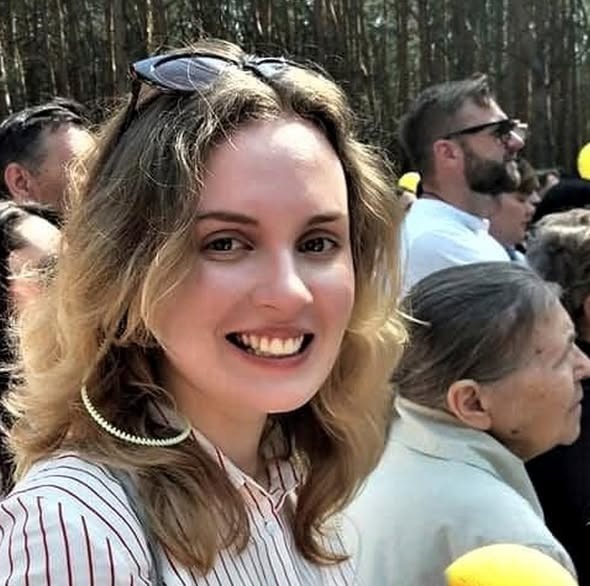
Inside a cage in a Belarus courtroom, Belsat TV reporter Katsiaryna Andreeva and a colleague awaited sentencing for broadcasting a banned protest in memorial for a man authorities reportedly beat to death during a peaceful protest against the disputed re-election of President Alexander Lukashenko to a sixth term. The two had been found guilty of “disrupting the work of public transport.”
Aleh Aheyeu, of the Belarusian Association of Journalists, an organization of independent journalists, told Capital News Service they had live-streamed the memorial from an apartment window overlooking the Square of Changes, a popular courtyard in the country’s capital, Minsk.
Aheyeu said authorities also arrested the tenants who lived in the apartment.
Andreeva, then 27, was sentenced to two years in prison, but it would not be the court’s final say over her life, as she would learn later.
The next year, in April 2022, as she sat in prison, news reports said she had been charged with treason, a more serious crime, and sentenced to an additional eight years in prison. No additional evidence had been presented against her, news reports at the time said.
Then on September 16, 2025, her husband, also a journalist, who had been her main source of support and a vocal advocate for her release, was charged with extremism and sentenced to four years in prison.
The Belarusian embassy in Washington did not respond to allegations in this article.
Media analyst and journalist Maryia Sadouskaya-Komlach of the research institute Center for European Policy Analysis (CEPA) explained the government’s logic in charging Andreeva with disrupting public transport.
“People are watching your live stream, and then they want to come there, and when they come there, they disrupt the public transport,”she said. “And if you wouldn’t have been live broadcasting, they would not have known about this protest, and then they would not have come.”
Censorship in Belarus
Belarus President Lukashenko has held power since 1994. He is the country’s first since it gained independence in 1991 from what was then the Soviet Union.
Lukashenko has used several tactics to stay in power, including jailing protesters and media critical of his government. Some human rights groups have accused the government of torturing opponents and creating vaguely-worded “extremism” laws to silence and imprison critics.
According to the U.S. Department of State’s 2024 human rights report, Belarus bans reporting on unauthorized mass events. Authorities severely limit access to information, have closed independent outlets, and penalize journalists who publish information critical of the government.
This year, the U.N. Office of the High Commissioner for Human Rights called on authorities to investigate the alleged ill-treatment of Belarusian prisoners. In particular, the members expressed concerns about the alleged ill treatment of three inmates convicted and sentenced to long imprisonments on terrisom and extremism charges.
Sadouskaya-Komlach, a media development specialist from Belarus, said there is a “level of humiliation and lack of access to basic goods and services that all political prisoners have. But women, because of the specifics of our bodies, are suffering even more.”
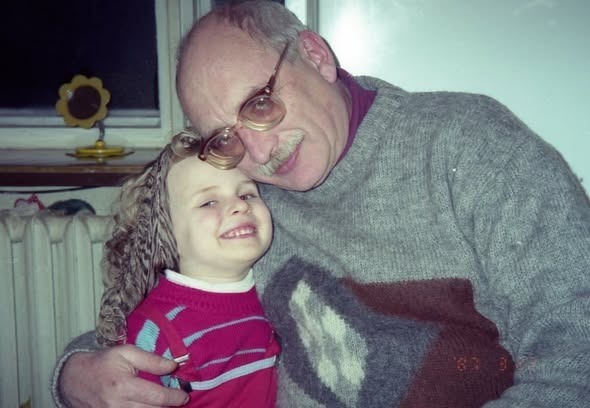
Andreeva’s grandfather, Sergey Vaganov, who has visited with Andreeva, said the family is worried about her health. “She’s lost a lot of weight and she’s got allergies,” he said.
Anna, a photographer living in exile who is a former co-worker of Andreeva and asked that her last name not be used for security concerns, said it appears Andreeva has been singled out. “It’s such kind of personal hate for her, I would say, and for this TV channel where we used to work,” Anna told Capital News Service, “because Lukashenko always hated Belsat.”
Her husband’s support
For the first years of her imprisonment, Andreeva drew support from her husband, said Nasta, another former co-worker and friend who asked that her last name not be used for fear of government retaliation. He was permitted to visit and bring her packages of undisclosed things.
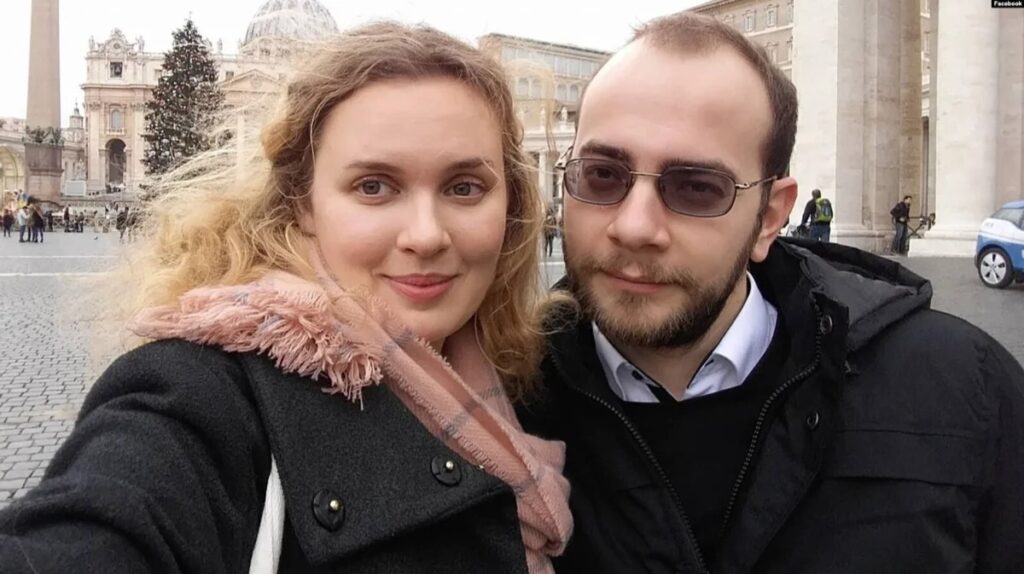
Nasta said Ilyash’s outspokenness was risky.
“Honestly, for us, [it] was surprising how he could stay in the country so long and not be arrested, because with everything that’s going on there, it’s really risky what he did,” she said. “… he took a lot of risks talking to media.”
Vaganov, her grandfather, said Ilyash’s imprisonment has caused his granddaughter stress.
“Of course she is very worried about him,” he said. “Moreover, they don’t have any correspondence. The information goes between them through us.”
Vaganov said Andreeva recommended that Ilyash bring warm clothing, footwear and utensils with him before he was transferred to a penal colony.
Life in prison
Andreeva gets to meet with her relatives in person twice a year for a long visit in a hotel, her grandfather told CNS.
Vaganov said he, his wife and Andreeva’s parents had a meal at his home to celebrate her birthday while she was in prison. “We gathered ourselves, celebrated, feeling the presence of Katya and Igor at our table,” he said.
Vaganov said Andreeva’s level of concern grows the longer they’ve been separated.
He said that when they are not visiting, Andreeva is constantly checking up on him and her grandmother by both letters and phone calls. “She keeps asking and demanding, even to the point of sending her the results of various medical tests,” he said.
Nasta has not seen Andreeva since her arrest, but was permitted to write her letters until February 2022.
“It’s difficult for me to understand how it’s difficult for her, because when you are sitting behind bars and… the letters are the only connection to the world, to your previous world, and the only … happy or joyful thing, and when they, well, cut you off, it’s devastating,” she said.
Correction: An earlier version of this story incorrectly stated that “Vaganov said he, his wife and Andreeva’s parents had a meal with her in prison to celebrate her 33rd birthday,” The story should have said “Vaganov said he, his wife and Andreeva’s parents had a meal at his home to celebrate her birthday while she was in prison.”
You must be logged in to post a comment.