

WASHINGTON – Democratic Sens. Angela Alsobrooks of Maryland and Ron Wyden of Oregon are calling for the resignation or removal of Health and Human Services Secretary Robert F. Kennedy Jr., saying his policies are jeopardizing public health.
The senators, who for months have been compiling a list of dozens of Kennedy policies and actions they consider dangerous, said the secretary has capped his offenses by limiting the availability of the hepatitis B vaccine.
Alsobrooks told Capital News Service she was urging “Americans to make health care decisions with their doctors and not listen to RFK Jr.’s handpicked conspiracy theorists who clearly have zero interest in science, medicine, or saving American lives.”
“The latest, and most dangerous, action by RFK Jr. to change the nation’s immunization schedule, recommending that America’s children wait to get their hepatitis B vaccine, will only make us sicker,” Alsobrooks said.
The Advisory Committee on Immunization Practices voted last Friday to remove the longstanding hepatitis B vaccination recommendations and shift to “individual decision-making” for newborns whose mothers test negative for hepatitis B.
The move has sparked widespread condemnation not only from many members of Congress, but also from medical organizations and public health officials.
Hepatitis B, known as the “silent epidemic,” is a liver disease caused by the hepatitis B virus (HBV). About one in two people with hepatitis B do not know they are infected because they don’t experience symptoms, according to the Centers for Disease Control and Prevention.
Wyden, the senior Democrat on the Senate Finance Committee, said time was running out to “disarm the radical anti-vaccine activists who are wrenching American public health backwards by a generation.”
“There is blood on the hands of Donald Trump, Robert Kennedy, and every Republican who has allowed this sham to go on for far too long,” Wyden said in a statement. “When kids die unnecessarily and once-eradicated diseases darken the doors of terrified families and pediatricians, Americans will know who is responsible.”
The ACIP recommendation shift means parents may be uncertain about the availability and safety of the hepatitis B vaccine for newborns, Alsobrooks said.
However, Maryland Gov. Wes Moore and the Maryland Department of Health have pledged to provide the vaccine to all newborns in the state.
“The hepatitis B vaccine has been tested extensively for safety and efficacy for decades, and when administered within 24 hours of birth, is highly effective in preventing newborn infection,’ Maryland Department of Health Secretary Meena Seshamani said in a statement last week. “Delaying the vaccine or not completing the full series has no known safety benefits for children. The ACIP’s action will lead to worse health outcomes for Maryland newborns.”
Maryland’s Public Health Service Administration issued an order that allows qualified personnel, such as pediatricians and nurses, to dispense certain medications without direct, patient-specific prescriptions, in an effort to “reduce morbidity and mortality from hepatitis B infection among infants and children.”
Kennedy in June dismissed all 17 members of the ACIP, an unprecedented move. He argued that a “clean sweep” was necessary “to re-establish public confidence in vaccine science.” He then appointed eight new vaccine advisers, some of whom have been criticized by public health experts as anti-vaccine advocates.
Before taking leadership of HHS, Kennedy led Children’s Health Defense, a top anti-vaccine non-profit that challenges public health measures through lawsuits. In the three and a half months before he ran for president in 2023, he took home more than $300,000 from the group, according to STAT News, a health-oriented news organization.
Sen. Chris Van Hollen, D-Maryland, called for Kennedy’s removal, telling CNS that the secretary is “throwing science to the wind and upending decades of sound vaccine guidance from public health experts that has saved countless lives.”
“By weakening longstanding hepatitis B vaccine recommendations for newborns, we face the risk of a resurgence of a preventable disease that we have all but eliminated among America’s young children,” Van Hollen said. “We must get back to a place where our vaccine guidance is science-based and fact-driven – and to do that we need to fire RFK Jr. and all the handpicked cronies he’s installed at HHS.”
Rep. Haley Stevens, D-Michigan, formally introduced articles of impeachment against Kennedy on Wednesday. It will likely be blocked by the GOP-led House.
“RFK Jr. has turned his back on science and the safety of the American people. Michiganders cannot take another day of his chaos,” Stevens said in a statement.
“When you get unsolicited medical advice from RFK Jr., it’s time to seek a second opinion,” Rep. Jamie Raskin, D-Maryland, told CNS.
ACIP first established a hepatitis B vaccination recommendation in 1982, following its licensing in the United States the previous year. The committee recommended the vaccine to high-risk groups like healthcare workers, men who have sex with men, intravenous drug users and dialysis patients.
In 1991, the committee established the most recent recommendation, which focused on the infection acquired in early childhood. Before universal infant vaccination, about half of all hepatitis B infections of children under 10 came from infected mothers. The other half of infections came from mothers who unknowingly were infected but didn’t test positive or from close contact with infected caregivers through blood or bodily fluids, according to the American Academy of Pediatrics.
Since 1991, hepatitis B infection among infants and children has declined by approximately 99%, according to a recent study from the Vaccine Integrity Project at the University of Minnesota.
“Estimated annual infections in infants and young children (fell) from roughly 16,000 in the early 1990s to fewer than 20 cases of reported perinatal infections per year in recent years,” the study said.
Currently, 44 states mandate hepatitis B vaccination for children entering elementary schools and childhood centers and 34 states require vaccination for adolescents in middle school, according to the CDC.
The vote, once approved by Acting CDC Director Jim O’Neill, brings the committee and the Trump administration a step closer to aligning with other countries that recommend fewer vaccines, such as Denmark, Japan and Germany, according to a White House memo.
“The American people have benefited from the committee’s well-informed, rigorous discussion about the appropriateness of a vaccination in the first few hours of life,” O’Neill, who also serves as deputy HHS secretary, said in a statement.
President Donald Trump praised the committee’s actions, calling the recommendation shift a “very good decision” on Truth Social.
Trump claimed that the vast majority of babies were at no risk of hepatitis B without vaccination.
But the American Academy of Pediatrics research found that “as many as 9 in 10 infants infected with hepatitis B in their first year of life will develop chronic infection that can lead to liver failure and death.”
Louisiana Republican Sen. Bill Cassidy, chairman of the Senate Health, Education, Labor and Pensions Committee, urged O’Neill on X not to sign the new recommendations and instead “retain the current, evidence-based approach.”
Cassidy, who is a liver doctor, said the change would be a “mistake.” In February, Cassidy cast the deciding vote to advance Kennedy’s nomination as HHS secretary.
“The hepatitis B vaccine is safe and effective,” Cassidy said on X. “The birth dose is a recommendation, NOT a mandate. Before the birth dose was recommended, 20,000 newborns a year were infected with hepatitis B. Now, it’s fewer than 20. Ending the recommendation for newborns makes it more likely the number of cases will begin to increase again. This makes America sicker.”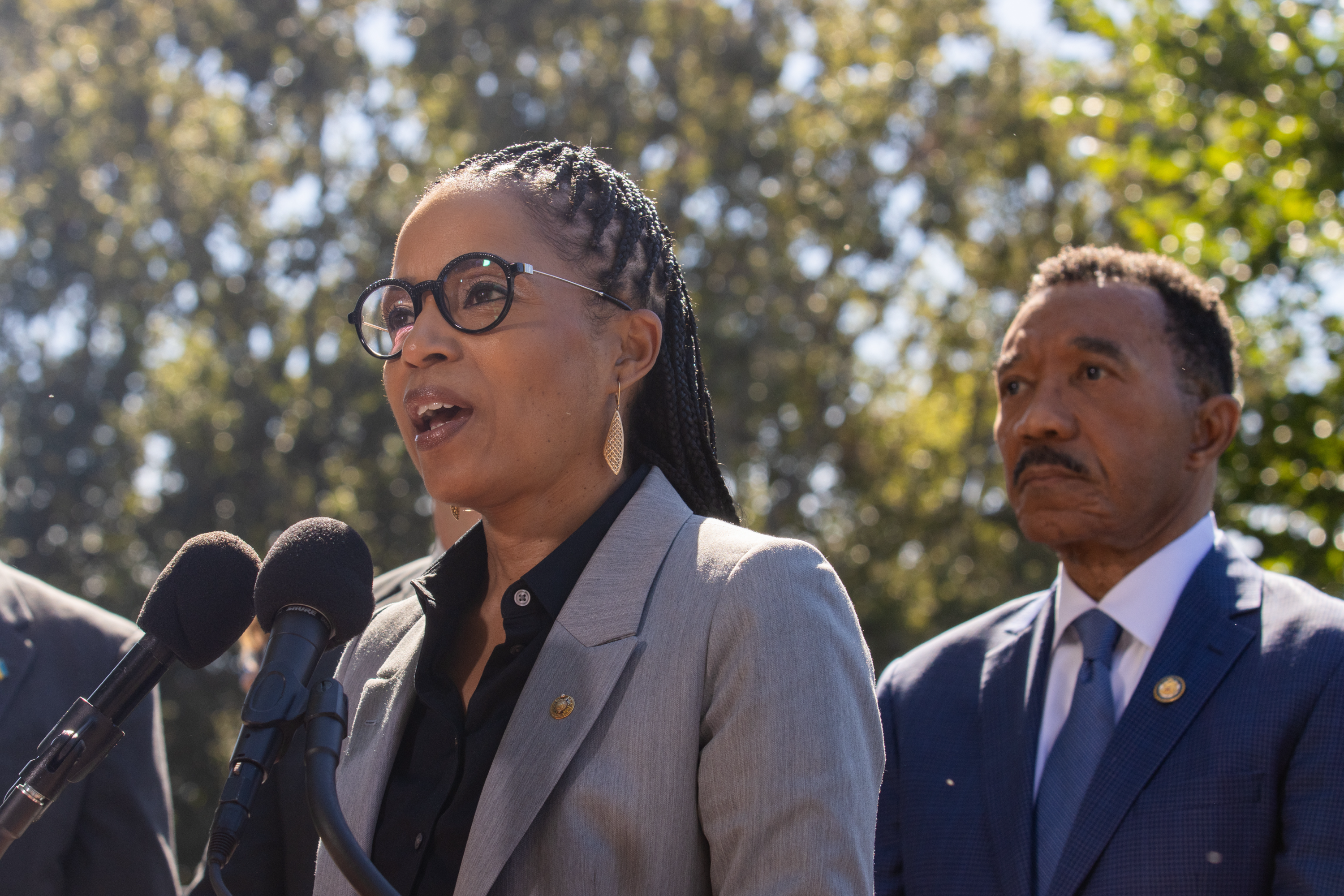
You must be logged in to post a comment.