
LONDON — Since 1987, Arsenal Women Football Club had played home matches at the 4,500-seat Mangata Developments Stadium in Meadow Park, a quaint field an hour north of London used by fifth-division men’s side Boreham Wood and the Arsenal academy.
But that’s changing after 38 years. From 2026 onward, the Gunners will play every home Women’s Super League (WSL) match in Emirates Stadium, the modern, 60,000-seat behemoth in the heart of North London.
The crowd of 37,726 fans for the Gunners’ first home match of 2026, played against Manchester United on Jan. 11, symbolized the growth in popularity of women’s soccer. The women’s game is gaining momentum in the United Kingdom just as it is in the United States; moves to men’s teams’ stadiums help facilitate that growth, and Arsenal remains a step ahead of every other team.
“Meadow Park’s nice, but nothing can beat here,” said Amy Brand, one of the fans in the stands on Jan. 11. “It’s just so powerful for us to be here, representing it in such a big stadium.”
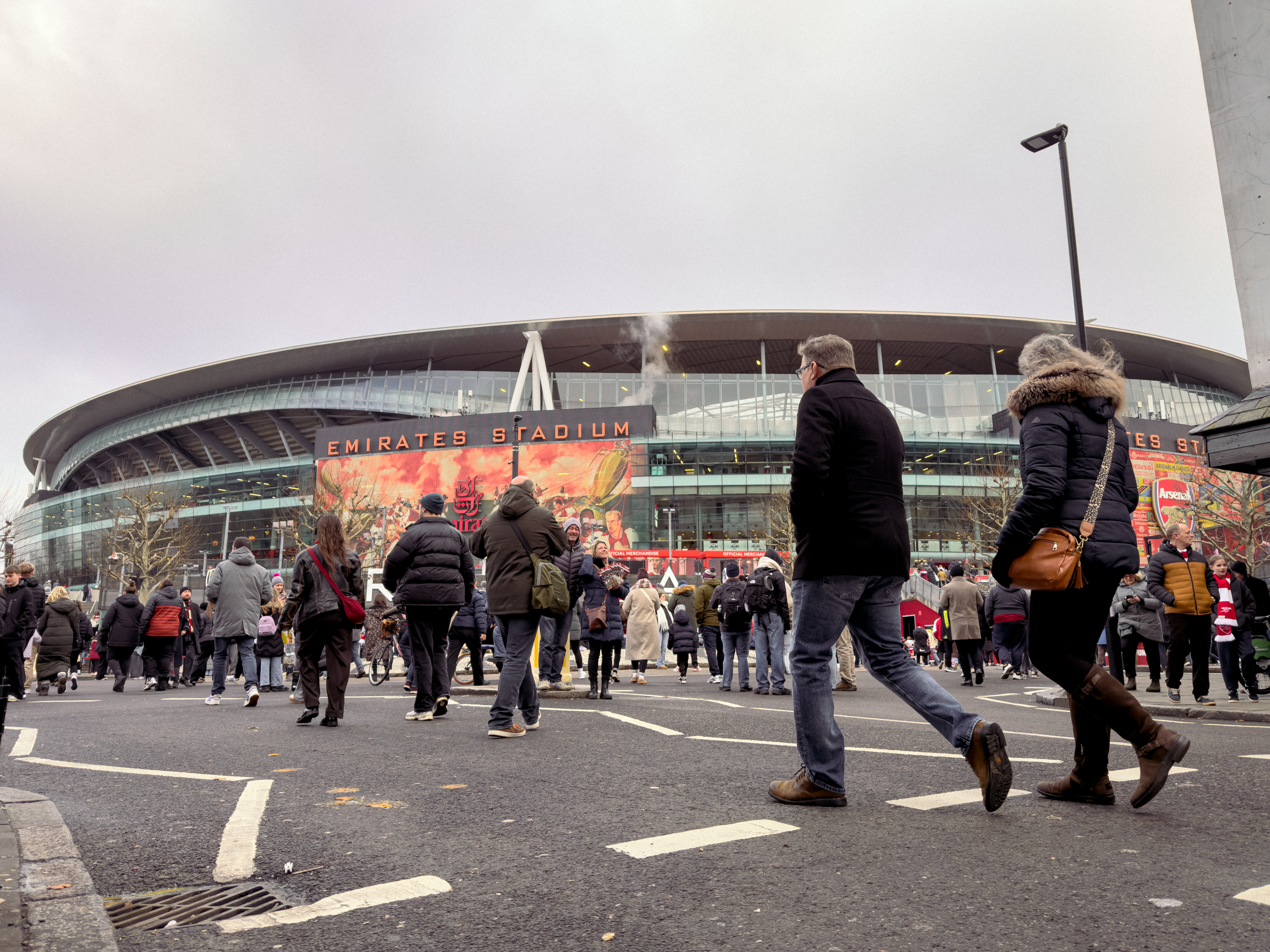
Emirates Stadium is a powerful sight. The stadium, which reportedly cost $350 million to build, was completed in 2006. It is the sixth-largest soccer stadium by capacity in the United Kingdom. The imposing structure soars far above the surrounding neighborhoods, but fans of the women’s team find the atmosphere at the Emirates welcoming.
“Arsenal is just like a massive family,” Gunners fan Steve Vaughan told CNS reporters ahead of the Gunners’ 0-0 draw against Manchester United. “I feel, personally, a lot safer bringing my girls here than going to some of the old places.”
The family atmosphere is a goal the club hopes to achieve at an organizational level. Fans walk beneath a massive mural of Arsenal legends — featuring players from both the men’s and women’s teams — at the entrance of the stadium on the way to their gates.
Such imagery linking the two sides is intentional. The club announced an increase in women’s games at Emirates Stadium before the 2024-25 season as part of what Sporting Director Edu Gaspar called a “vision to win major trophies across our men’s and women’s teams.”
That season ended with Arsenal lifting the UEFA Women’s Champions League trophy for its second victory in the competition and first in nearly two decades. The men’s team has never won the equivalent competition.
The women’s team has had sustained success since its founding — Arsenal have won 63 trophies over their 38-year history, including at least one trophy in 13 consecutive seasons from 2003 to 2016.
As a result, the support for the women’s side has swelled over the years, leaving the club poised to make the leap to a larger stadium.
According to WSL Analytics, the Gunners recorded an average attendance of 28,808 in the 2024-2025 season — more than three times the average attendance for the next-closest team.
Splitting time between stadiums is common across the WSL — several teams have staged meaningful games against rivals or high-level opponents in the men’s stadiums. Historic grounds such as Stamford Bridge, Old Trafford and Anfield have played host to important games for the Chelsea, Manchester United and Liverpool women’s teams, helping boost their average attendances.
Beyond Arsenal, though, the league plays the majority of its games at smaller venues, limiting the potential for impressive crowds. That is largely due to necessity — most teams have not turned the same corner as Arsenal, and they remain far from packing the stadiums.
But the more intimate environments provided by smaller grounds has been a big draw for some fans. Even Arsenal themselves aren’t fully letting go of Meadow Park, which will be used for national cup games and the group stages of the Women’s Champions League, in spite of the financial boon of ticket sales at Emirates Stadium.
“I do prefer Meadow Park because you’re closer. It’s smaller, it’s a tighter ground, it just feels better,” Vaughan said. “It’s a bit more personal when it’s a smaller stadium, but here [at the Emirates], they’re definitely making more money out of the Arsenal fans.”
Money is important for a team such as Arsenal aiming to flex its power on the world stage. The club signed Olivia Smith in July from Liverpool for a then-world record $1.33 million. That transfer marked the second of four occasions in 2025 in which the transfer record would be broken, a sharp reminder of the rapid ascent of the women’s game.
At the same time, given half of WSL teams averaged under 4,000 fans per game last year, operating costs are a limiting factor. Not every women’s team shares such a positive relationship with its counterpart on the men’s side, and not every club can pack major stadiums to a profitable degree.
As the game continues to grow, however, so do the possibilities. Women’s soccer is increasing in popularity, especially among younger fans, and Arsenal will be far from the last club to make that move.
“The more clubs that do use the full stadium, I think can only be a good thing,” said Andy Brice, a father of two young Arsenal fans who took his kids to a women’s game for the first time to start 2026. “It just shows how the women’s game is growing.”
