

Cardiff, WALES – Lewis Clutton waited until his soccer club got knocked out of the UEFA Conference League. Then, he ripped off the Band-Aid.
“This is what I’m going to do,” he told his head coach after losing in the tournament. “I’m gonna leave for America.”
His coach responded: “I don’t blame you. Go and live in Los Angeles, live your life.”
Clutton’s decision represents a growing conversation in the U.K, where younger players are considering college soccer in the U.S. instead of grinding through the lower leagues in Europe. The players cite the quality of American education and the opportunity for high-level playing experience as enticing reasons to cross the pond.
Clutton, now 24, came to the U.S. in 2023 after growing up playing for youth soccer academies and teams across the U.K. Once he learned what the American college experience offered, he was all in.
“And [my former teammate] was telling me about all the stories, the facilities, the traveling, all the gear that you get, the girls, the parties,” Clutton said. “I was like, ‘Damn, that sounds…sick’.”
Clutton was one of 228 players from the U.K. in men’s NCAA Division I soccer last season — approximately 3% of the player pool. Over the last decade, the percentage of international players in the NCAA increased from 23% to 34%, according to an analysis of Division I team rosters by Derek Willis, a data journalism lecturer at the University of Maryland’s Philip Merrill College of Journalism.
The men’s soccer team at the University of Maryland, which advanced to the NCAA quarterfinals in 2025, is an example of this trend. This year’s team had eight international players in the starting lineup.
“The biggest advantage is that college soccer is a uniquely American asset where you could get a high-level college degree and play high-level soccer,” Maryland men’s soccer coach Sasho Cirovski told Capital News Service and The Shirley Povich Center for Sports Journalism.
Clutton had a similar view. After spending his childhood in the Bristol Rovers FC youth academy, he secured a professional contract. Less than a year into the deal, Clutton was released. With his soccer future uncertain, he turned to his studies.
Sam Snaith, a former teammate of Clutton’s who played at Coastal Carolina University, told Clutton about the opportunities available in the NCAA. Clutton was unsure, but decided to consider the idea.
He joined the Loyola Marymount University men’s soccer team in 2023. Arriving at his first game, he knew the name of just one of 29 teammates. Clutton was not granted NCAA eligibility until minutes before kickoff of the Lions’ season opener.
“[A coach] came up to me in the warmup, and he was like, ‘You’ve just been cleared. Be prepared to start the game,’” Clutton recalled.
Clutton, who grew up in Undy, a small village west of Cardiff, the capital of Wales, had only been with the team a week and would not have played if kickoff had been earlier. A year prior, he didn’t know anything about Division I college soccer. Now, he was starting for a Division I team.
“I think when I was younger, that there’s no way [a conversation about college soccer in the US] would have happened,” former England men’s national team goalkeeper Joe Hart told CNS reporters on Jan. 7.
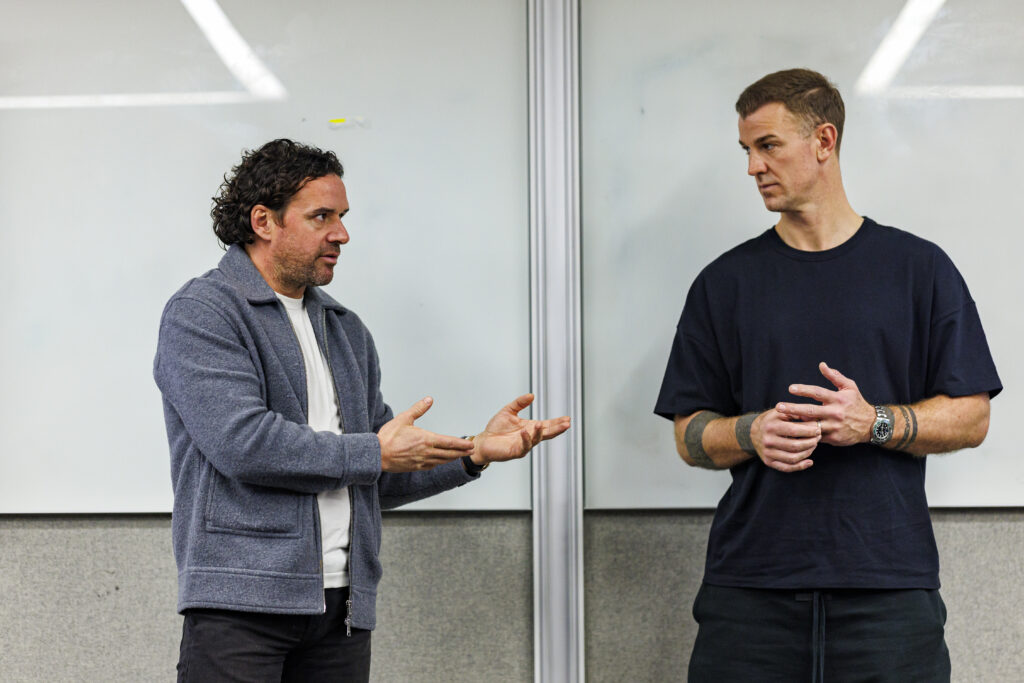
Hart, who retired from professional soccer in 2024, said he is not surprised players are deciding to play for American universities. Instead of bouncing around the U.K.’s lower soccer leagues, players play soccer while enjoying the American college experience.
In five years, Hart said if his 11-year-old son is thinking about playing soccer professionally, going to college in the U.S. would be on the table.
“If we were having a discussion about him potentially going down the route I went, which is a leap to the Fourth Division, Shrewsbury Town, or going and getting a scholarship in America, it would be a conversation,” he told CNS.
Arriving in America
Clutton did not know where to start when looking for American universities. Snaith’s agent stepped in to guide the young midfielder. For most, a recruiting agency navigates the transition.
“In soccer, the really good players have already been in touch with agents since they’re 12, 13, 14 years old, so they’ve already had a longer relationship,” Cirovski said. “We can’t talk to kids until their junior year.”
Under NCAA rules, college coaches cannot contact recruits until their junior year of high school. British firms with connections in U.S. college soccer often act as matchmakers. One such company, Vertex Soccer, helped Clutton navigate his own transition to the NCAA.
Vertex’s head of U.K. operations, Ollie Shannon, helps young soccer players explore what America has to offer. Shannon was a highly regarded player. After 13 years playing for Everton FC youth academy, he made the move to America himself.
Shannon played at Clemson for four years and graduated with a degree in business administration.
“I think looking back now, it’s the places you go and play at,” he said. “You’re flying around all these different places on a charter plane. You get to go to different parts of the U.S.”
Shannon uses his experience in the NCAA to help players make decisions. He said it’s sometimes hard to tell young players they won’t play in front of thousands of fans in the Premier League. When they learn more about opportunities in America, he said, their views can change.
“They’re all so desperate to earn the money and play professionally over here,” he said. “They kind of understand halfway through it, ‘Well, this is more about the experience.’”
Social media is a growing platform for young players to see what America has to offer.
“It’s coming up on their FYP, on their Instagram, whatever it is,” Vertex Soccer scholarship operational consultant Miles Fenton told CNS. “The stuff they see is really, really appealing.”
Yet despite benefits to playing college soccer in the U.S., the decision is not right for everyone.
Staying in the U.K.

Ryan Reynolds, who plays for Cardiff Metropolitan in the Welsh Premier League, says he considered playing college soccer in the U.S. but ultimately decided against it.
The 25-year-old bounced between youth academies and clubs in Wales and the U.K. He was never able to secure a big professional contract.
“I should have looked into it a little bit more, for sure,” Reynolds said of his decision to forgo playing at an American university. “Unfortunately, [I] didn’t at the time.”
Doubts about a move to the U.S. held him back, including how the financial side would work, whether he would know anyone from the U.K., what his living situation would be like and how he would handle the separation from his family back home in Wales.
Changes to American soccer
Soccer calendars in the U.S. are shifting, which could make the NCAA an even more appealing destination for U.K. players. In November 2025, Major League Soccer announced a switch to a July-to-May calendar starting in 2027, similar to U.K. leagues, which run from August to May.

The NCAA soon may be weighing a similar move — a “split” season in which teams play August to May. The NCAA championship game for college soccer is in December as of now, but that would move to May.
Cirovski, the University of Maryland men’s soccer coach, has advocated for such a system for nearly 20 years. He said he expects a proposal to be voted on by NCAA members as soon as July, with a potential new calendar in effect for the 2027-2028 season.
Cirovski brought up the possibility of the change at the Povich Center’s 20th annual Symposium in December, which included conversations on the state of soccer in the U.S.
“My goal is simple: To make college soccer the destination of every 18- to 23- year old in the world that is not signed to a first-team deal of a big pro league,” Cirovski said.
You must be logged in to post a comment.