
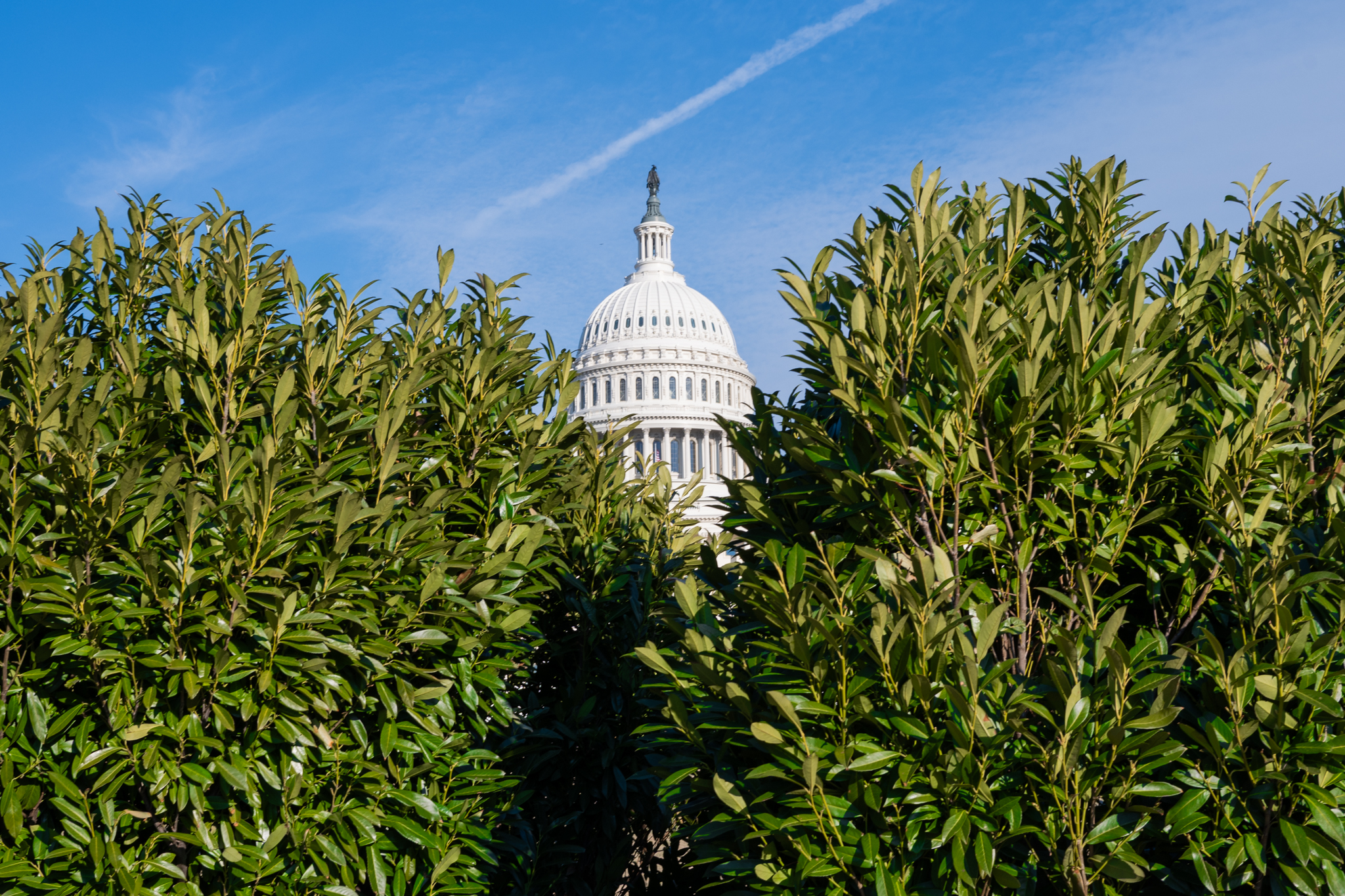
WASHINGTON – Beneath framed photos of cows, chickens and cranberry farms lining a House committee room, lawmakers questioned USDA Under Secretary Luke Lindberg about trade policy and export markets.
“Our mission is clear, restore fairness and reciprocity in global markets and return America’s agricultural trade balance to a surplus,” Lindberg told the panel this week.
The U.S. agricultural balance sheet shifted into a deficit in 2019, for the first time in more than 50 years, after retaliatory tariffs during the U.S.-China trade war. Tariffs imposed by China reduced demand for U.S. agricultural exports in one of their largest global markets, a topic lawmakers repeatedly discussed during the hearing.
Throughout the lengthy inquiry, the room was a revolving door as some representatives came and went, briefly offering their piece. One of the contributors was Rep. Rosa DeLauro (D-Conn.), who questioned trade policy and the continuous rise of the deficit.
“The food trade deficit grew by nearly $4 billion dollars, in real terms, during the first eleven months of 2025,” DeLauro said. “That does not seem like a trade policy that works for farmers.”
Rep. Andy Harris (R-Md.) was one of the only representatives to stay the full duration of the hearing. After lingering conversations with both Lindberg and other members of the subcommittee, Harris offered his thoughts on what issues farmers in his district are facing.
“They want a robust crop insurance program,” Harris told Capital News Service.
Miles away from Washington in Maryland’s Eastern Shore, farmers say the challenges they face often look different from conversations happening near the U.S. Capitol.
Wayne Quidas grows carrots, watermelons, sweet corn, strawberries, blueberries and other plentiful produce on the Eastern Shore and sells them to consumers throughout the region.
Wings Landing Farms LLC is a family-owned farm in Caroline County that has operated for more than 100 years. Quidas now owns the farm and is teaching his oldest daughter the ropes so she can take it over when he retires.
Many of those same lessons trace back to his early days on the farm, learning the cutthroat curriculum from his father at the “Robert Quidas School of Agriculture,” Quidas said.
One of the more prominent issues for Quidas’ operations has been the rise of monopolies driving up the price of the materials they need to produce crops. Fertilizer is particularly expensive, he said.
“Potash is a key element that we use for plant food. Why are they so high?” Quidas told Capital News Service. “And they’re talking about going up higher.”
A few companies control more than 90 percent of the fertilizer industry in North America.
Quidas’ request of Washington is that it break up monopolies. He’d also like to see the United States reduce its dependence on other countries by producing more domestic crops and buying from American farmers.
“People need jobs, not everybody is capable of working on computers or in AI,” Quidas said. “Manufacturing is still what will drive the country. We need to produce as much as we can here, but particularly when it comes to food and energy.”
About 30 miles south of Wings Landing Farms, along the Transquaking River in Cambridge, Maryland, farmer Mike Knauer echoed some of those sentiments.
However, a different concern is spreading across his neck of the woods – solar panels.
“It is a detriment to us,” said Knauer, a Dorchester County farmer and president of the local Farm Bureau. “None of that power stays here, it all goes to the Western Shore.”
Knauer grew up at Transquaking Farms, a Maryland Century Farm owned by his family, learning how to grow soybeans and corn from his father. But in 1995, he traded in his plow and tractor for an impact wrench and a jack, working as a NASCAR pit crew member.
After 15 years on pit road, surrounded by the smell of burning rubber, Knauer returned to the farm in 2010, right before solar energy began to expand across the United States.
Solar projects on farmland are typically developed through long-term land leases. According to Matrix Solar, rates paid to farmers in Maryland usually range from $800 to $1,500 per acre per year. While farmers receive steady payments for the land, the power harvested in their fields flows into the regional grid rather than the farms themselves.
“There’s no benefit to us other than we’re producing power for the Western Shore and parts of Virginia,” Knauer said. “There’s no benefit to us other than we’re losing farmland.”
Knauer said he hopes that one day some of the solar energy generated on both his farm and other land throughout Dorchester County will become available to its residents.
“Everybody already has increased electric bills,” Knauer said. “It would help if they could generate some electricity back [to the county] so power companies can spread it across the communities and give everybody a break.”
The two men don’t harp on politics. They don’t bring up Washington a lot in conversation.
When their time on the farm is done, Knauer and Quidas say they both plan on passing the torch to their children, as their fathers did for them.
“We have to leave our land in the best shape we can for the next generation,” Knauer said. “If we don’t maintain our land … we won’t have anything to pass on.”