
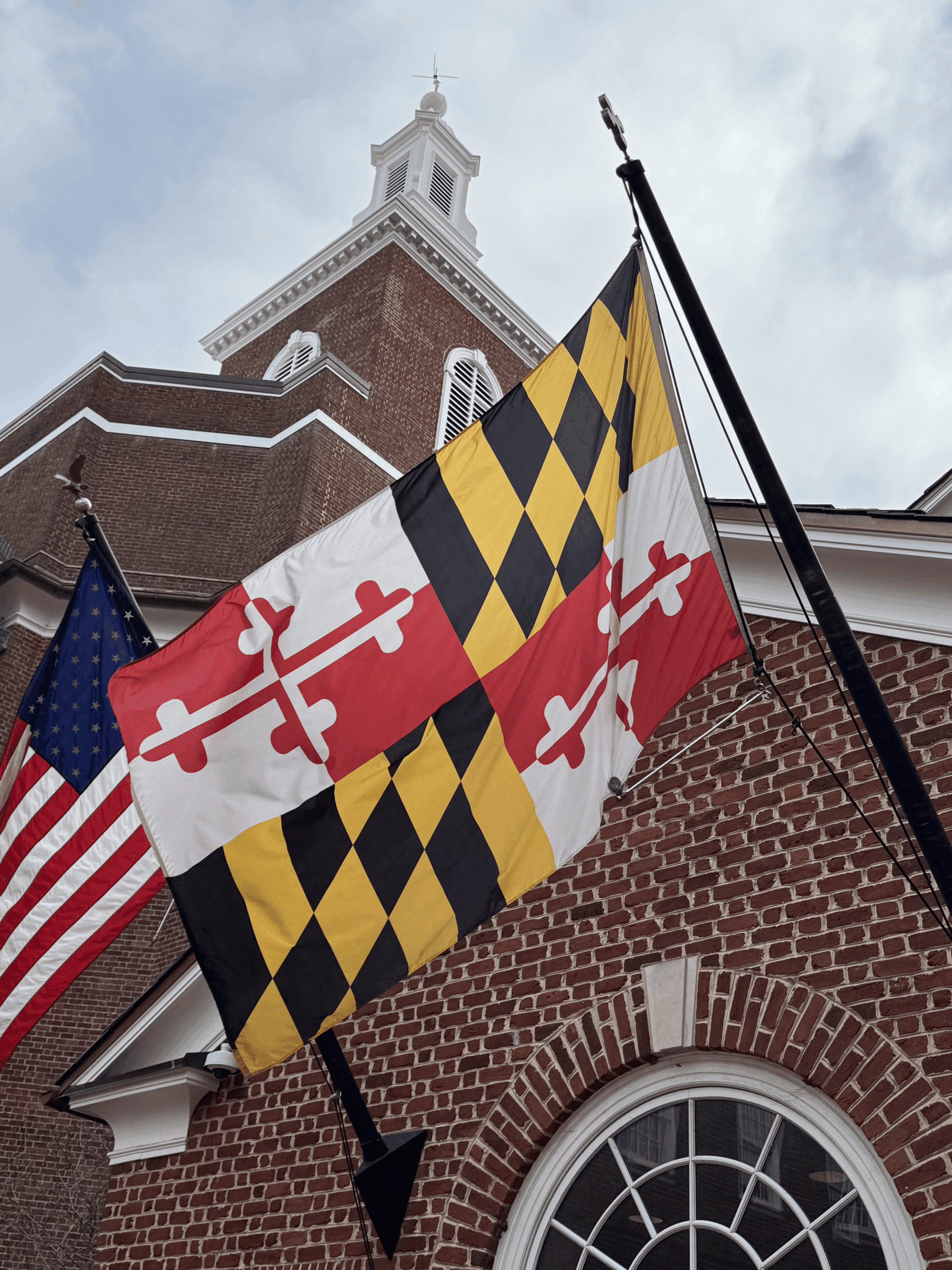
ANNAPOLIS — Maryland will celebrate the 122nd birthday of its official state flag on Monday at a time when its symbols have become a political flashpoint.
Many Marylanders consider the flag a cultural linchpin. Its “bold colors, interesting patterns, and correct heraldry” make it “a flag that fairly shouts ‘Maryland,’” according to the Maryland Secretary of State’s website.
But some lawmakers and historians disagree about the flag’s symbolism. Experts said its complicated history has led to different interpretations and narratives, even stirring debate in the political arena.
“It is a unique and nuanced story,” said David Armenti, vice president of education and engagement at the Maryland Center of History and Culture. “It’s complex, and it carries different meaning for different people. But what I think is more important is that it opens up the door to learn about it.”
Zachary Gardiner, a vexillologist — or flag specialist — has done just that. He researched more than 50 primary sources and traced the origins of the state flag to the origins of Maryland.
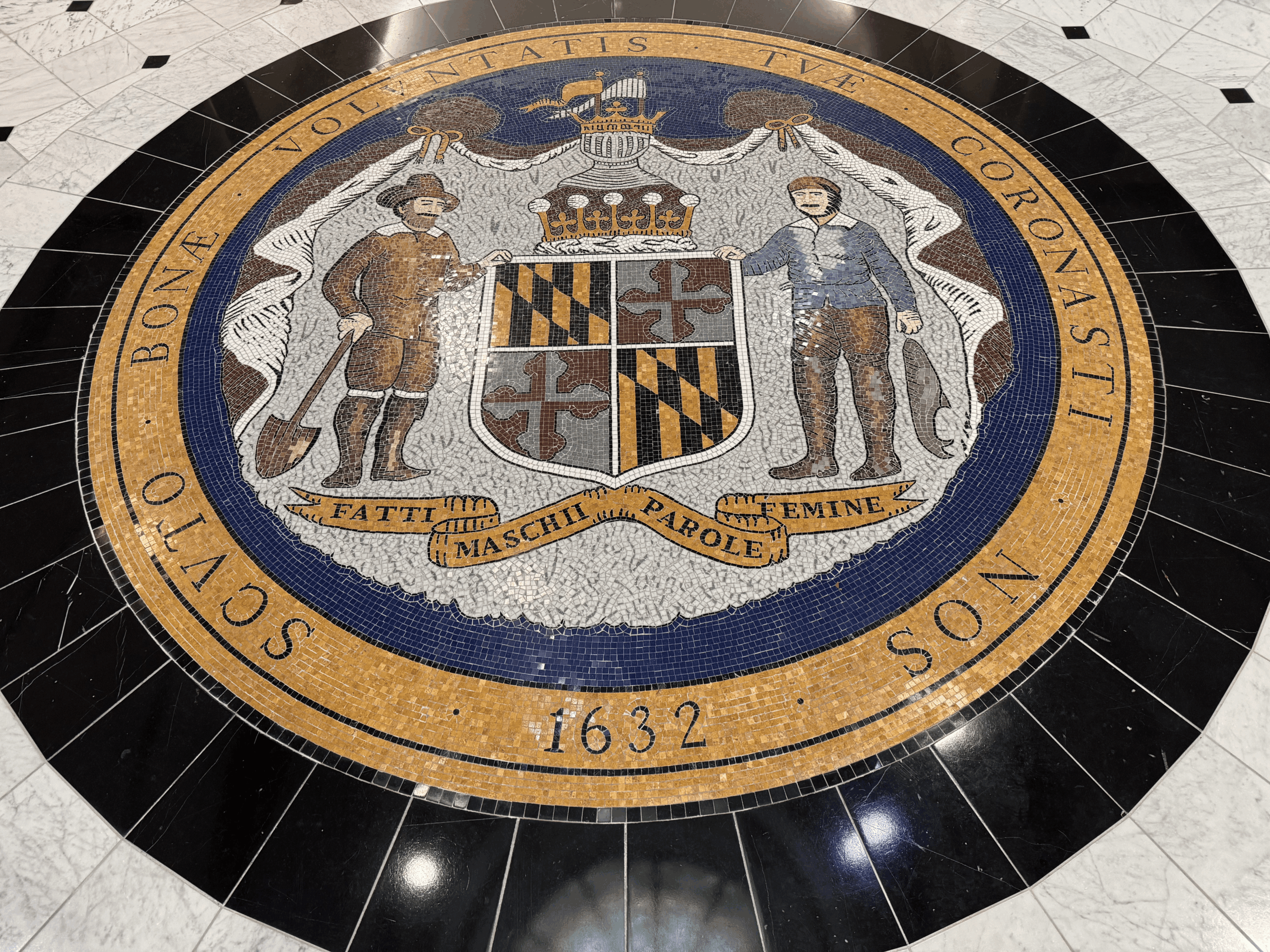
Cecil Calvert, the state’s founder and first governor, created the Great Seal of Maryland to represent the state, according to Gardiner’s research. He said the seal was inspired by heraldry, a term defined by The Heraldry Society as a “systematic use of hereditary devices centred on the shield.”
Calvert created the pattern by combining the black-and-gold familial symbol of his father and the red-and-white symbol of his paternal grandmother’s family on the seal, according to the Secretary of State’s website.
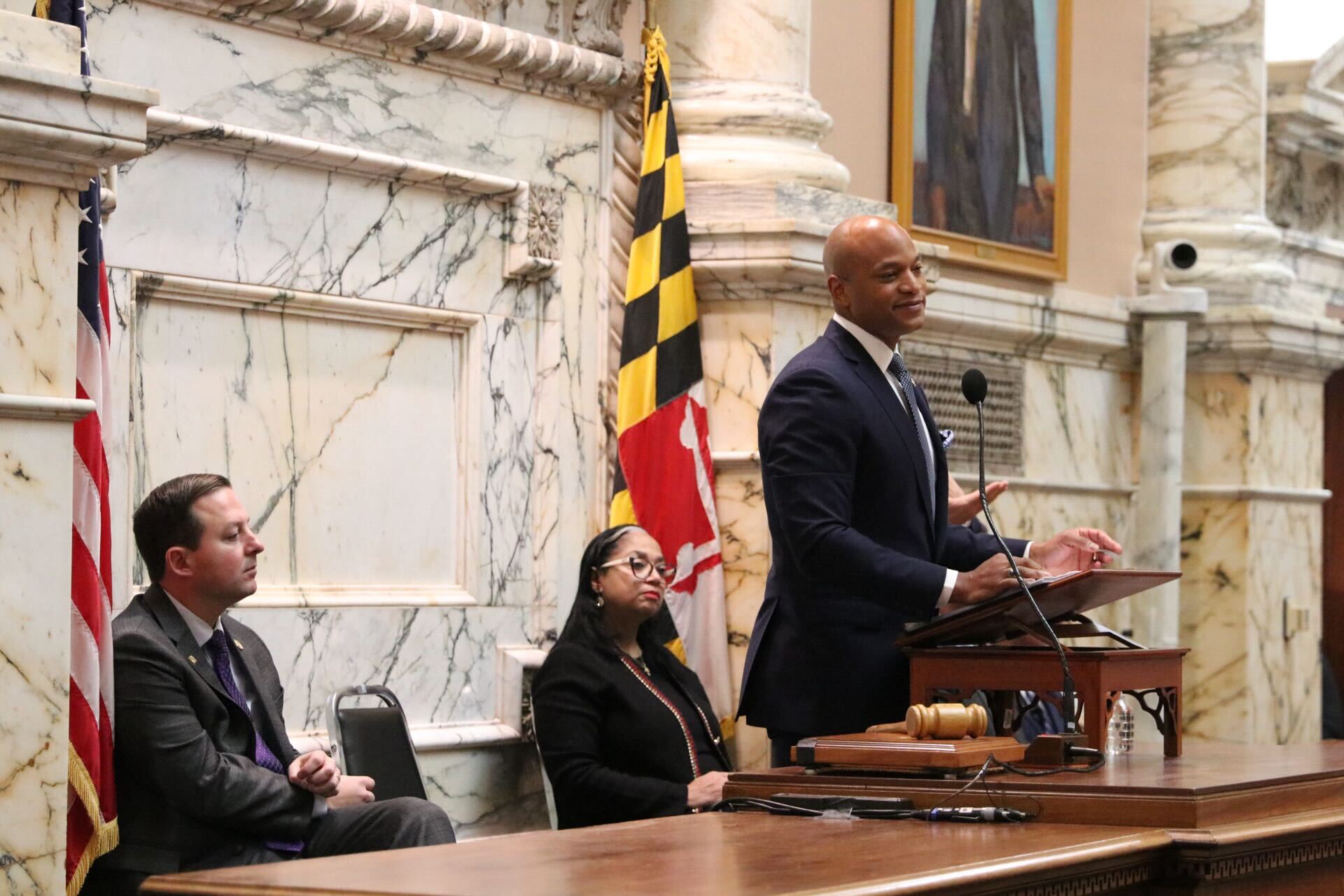
The flag, which took its patterns from the seal, was in the spotlight after Maryland Gov. Wes Moore called it a “contradiction” on The Press Box’s Jan. 29 podcast.
Moore is the first Black governor of Maryland, a former slave state whose flag he said “is literally a Confederate symbol mixed with a Union symbol.”
“Maryland is the northernmost Southern state in this country,” Moore said. “The bloodiest battles of the Civil War were fought in Maryland. And despite that, I stand here as the governor of that same state.”
Some lawmakers criticized Moore’s characterization of the flag, including Senate Minority Leader Stephen Hershey Jr., R-Queen Anne’s.
“The fact that he called the Maryland flag a contradiction I think is not only wholly inappropriate, but is very hurtful to the citizens of Maryland that really look at this Maryland flag [with] pride,” Hershey said in a February press conference.
Moore’s comments spurred discussions on social media, including debates over changing the flag. Moore, however, did not call for a change, and in fact turned to X on Feb. 5 to say he would not change it.
Love the flag.
Ain’t changing it. Back to work, everyone. pic.twitter.com/3xwIHBAjOC—
Governor Wes Moore (@GovWesMoore) February
5, 2026
In a poll released the same day by the Baltimore Sun, 96.4% of 5,114 respondents opposed changing the state’s flag.
Moore repeated his support for the flag during his State of the State address Feb. 11.
“I love this flag, the flag is not changing,” Moore said. “We’ve got the best flag in the country, but also it’s the most important symbolic flag in this country. Because this flag is a combination of two opposing ideas, hence a contradiction. But that’s what makes it so special.”
The Secretary of State’s website also said “the yellow-and-black Calvert arms and the red-and-white colors and bottony cross design of the Crossland arms … represented opposing sides in the conflict.”
Gardiner, however, said much of what people believe about the division of the Maryland flag during the Civil War era is untrue. In particular, he said, the concept of the black-and-yellow and red-and-white quarters separating and reuniting is “largely overblown.”
“In reality, they have always been together because it was the coat of arms of Cecil Calvert,” Gardiner said. “Ultimately, I couldn’t find any examples of red, white and red being used as secessionist colors by Maryland in reference to the Crossland aspect of the coat of arms. It was always in reference to what some people call the secession banner.”
While some debate the historical significance and symbolism of the state flag, its cultural significance is still appreciated by many across the state, experts said.
“We also need to recognize that the Maryland flag is the point of pride for a lot of Marylanders of all races and all ethnicities and all creeds,” said Martina Kado, vice president of research and France-Merrick director of the H. Furlong Baldwin Library at the Maryland Center of History and Culture. “Maryland is almost used to complexity being part of its fiber.”
You must be logged in to post a comment.