
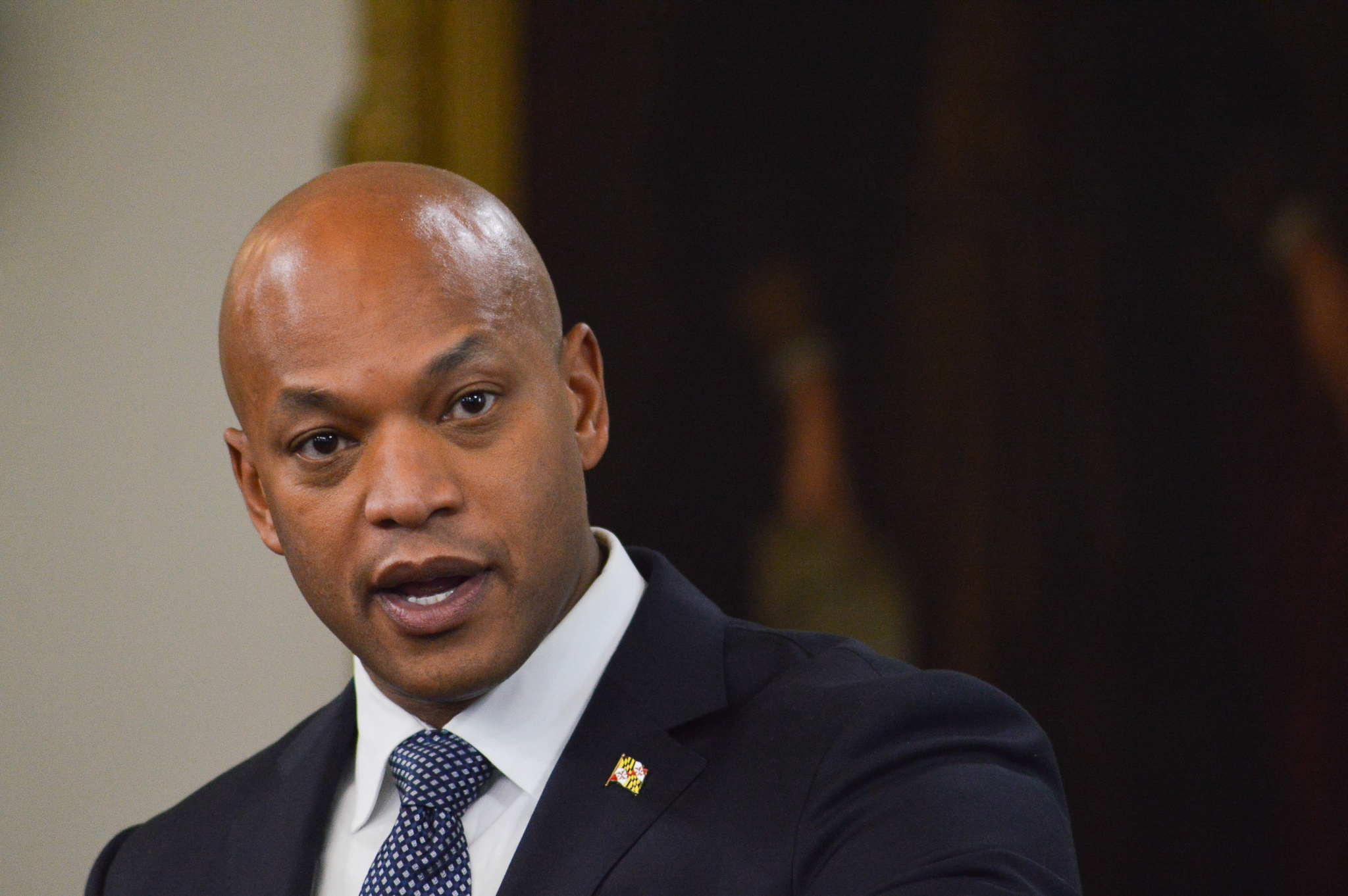
ANNAPOLIS — Gov. Wes Moore championed redistricting on the national stage. A top Congressional Democrat made a rare trip to Annapolis to push for action. And the Maryland House voted to approve a new map.
But the full-court press wasn’t enough to push Maryland’s proposed congressional redistricting through a resistant Senate leadership, leaving the plan stalled in committee and with an unclear path forward.
Maryland’s proposed congressional redistricting plan has drawn high-profile support from national Democrats and local lawmakers who argue the state still has a shot at redistricting.
“I have seen bills pass in one day here, where they pass both chambers and they’re signed by the governor in one day,” House Speaker Joseline Peña-Melnyk, D-Prince George’s and Anne Arundel, said Tuesday. “So where there’s a will, there’s a way.”
But its detractors say time is up.
Candidates seeking to run for office in Maryland had until Feb. 24 to file their paperwork with the State Board of Elections. And for months, the Senate hasn’t budged from its opposition to act on the plan.
Can the new map still be approved?
Peña-Melnyk said she believes the redistricting plan still has a chance.
“We passed the bill,” she said. “The House made it a priority. It is in the Senate, and there’s still time for the bill to pass.”
Talk of a possible backup plan has spread in recent weeks, but the governor’s office has not confirmed an alternate plan. Peña-Melnyk said Tuesday she’s still on “Plan A.”
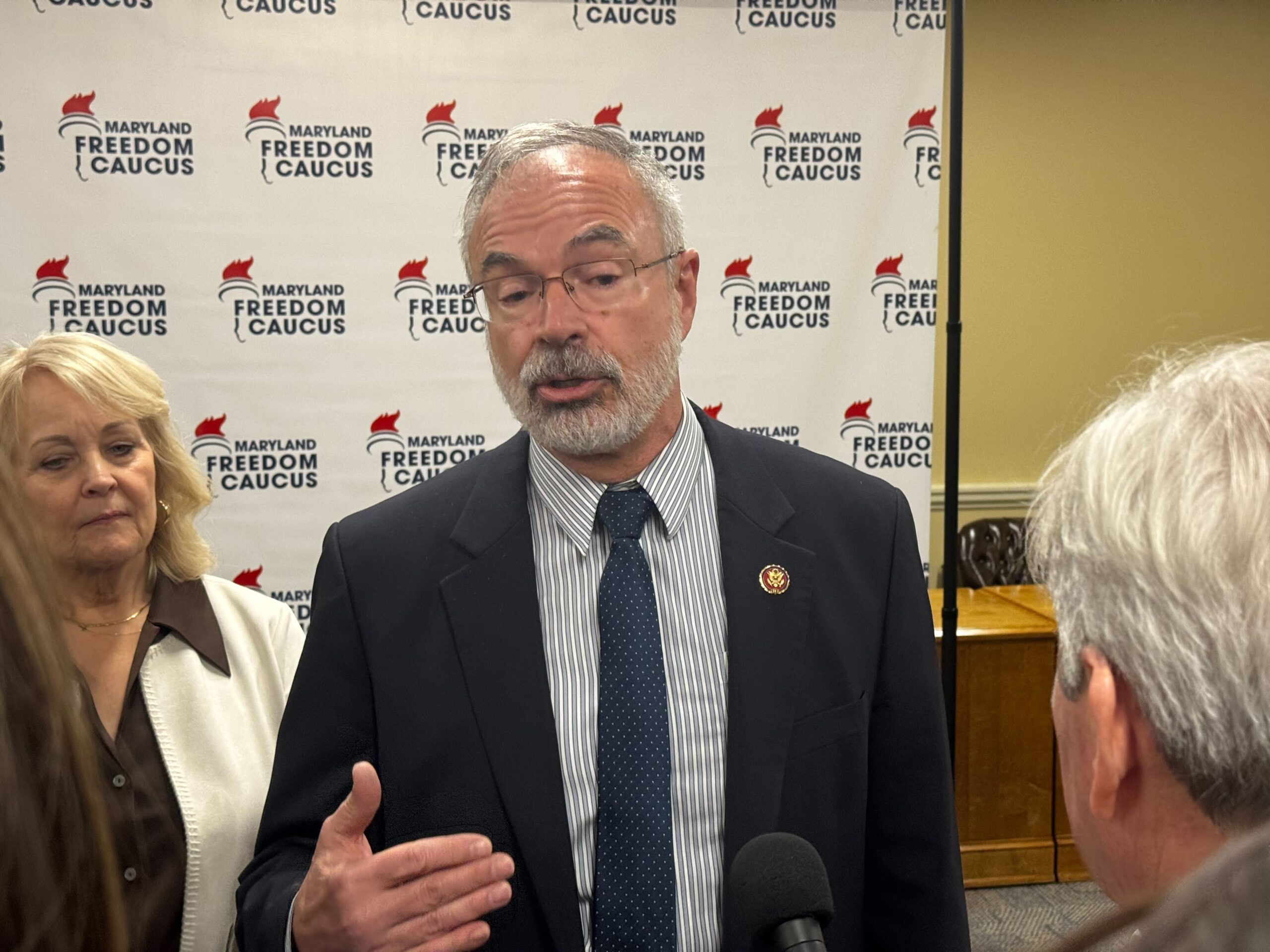
U.S. Rep. Andy Harris, R-Md., the state’s lone Republican congressman whose seat is vulnerable to redistricting, told reporters after a Maryland Freedom Caucus press conference Feb. 25 he thinks the plan’s chances are “functionally gone.”
Any alternative plan will be fought in federal court, Harris said.
“And simultaneously, we will go to state court and challenge the current map because the current map has never been challenged in state court,” he said.
Moore’s office said it will keep all options on the table.
“Maryland is going to stay ready,” Ammar Moussa, a spokesperson for Moore, said in a statement Wednesday.
The Trump administration and Republican-led states are manipulating the “rules of the road” by redrawing congressional maps and pushing voter suppression efforts ahead of the November elections, Moussa said.
“We’re going to keep doing the work that is required and the work that is necessary—evaluating all responsible options and timelines to protect Marylanders and to defend fair representation,” he said.
How did we get here?
Maryland’s plan comes amid a wave of mid-decade redistricting proposals across the U.S.
It kicked off when the Republican-led Texas state legislature approved a new map that would likely flip five Democratic congressional seats. California Democrats responded with Proposition 50, a statewide vote to approve a new map targeting five Republican seats. More than a dozen states have considered or approved new congressional maps, according to the National Conference of State Legislatures.
In November, Maryland joined the fight. Moore announced he was reforming the Governor’s Redistricting Advisory Commission to recommend how to redraw the map.
Some experts are wary of the plan’s potential impact on the state — and nation.
Matthew Crenson, a political science professor at Johns Hopkins University, said mid-decade redistricting of congressional seats is not customary, and would not have happened here if not for the Republican-initiated plan in Texas.
He said that, in a way, redistricting is a “spreading virus,” and that Maryland’s plan will only further undermine trust in U.S. elections.
Still, the Maryland House passed a redistricting bill in February. It has yet to receive a committee hearing or a floor vote in the Senate.
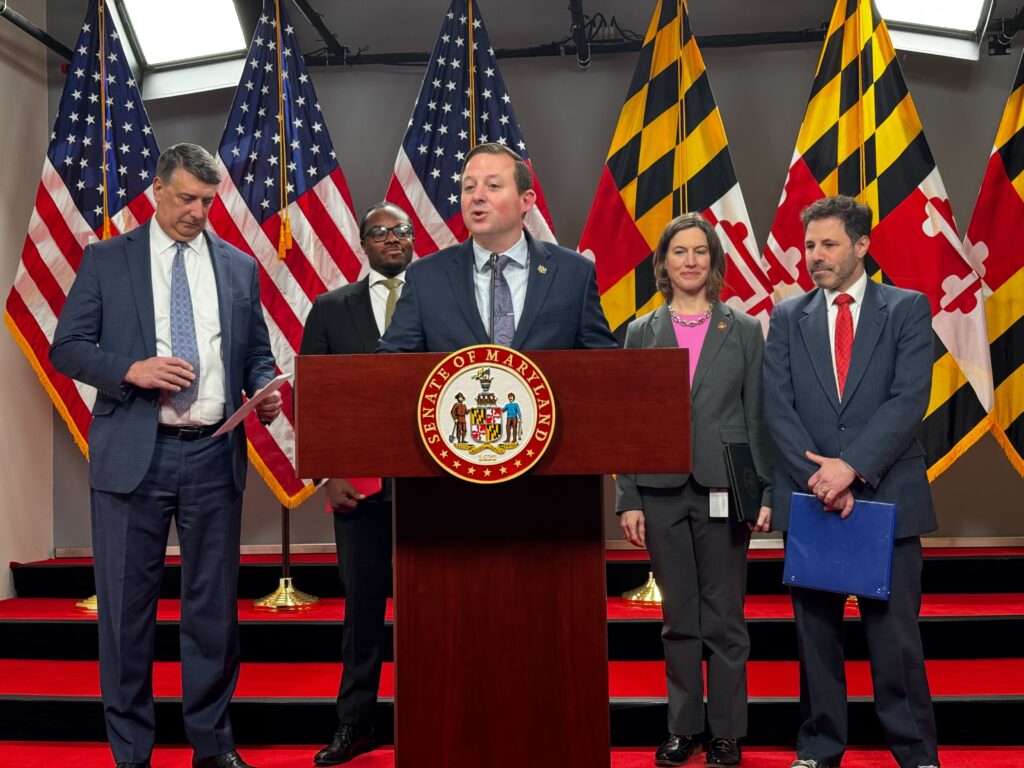
Senate President Bill Ferguson, D-Baltimore City, has long opposed redistricting, arguing the proposed map would not likely survive a legal challenge and could actually put Democrats at risk of losing seats in Maryland. It’s too late to go through with the plan, he’s said, given the state’s campaign filing deadline has passed.
Ferguson wouldn’t say whether he believes the effort is officially dead.
“We’re focused on the things that matter and that we know that we can do to respond to the Trump administration at a time when things are being ripped apart in Maryland,” Ferguson told reporters at a press conference last Friday.
Why do national Democrats care?
Congressional Democrats lobbied state lawmakers to approve the plan: House Minority Leader Hakeem Jeffries of New York met with leaders in Annapolis, while Maryland Rep. Jamie Raskin sent a letter to the state legislature.
Jeffries said a “strong, forceful Democratic response is necessary” to combat the impacts of the Trump administration.
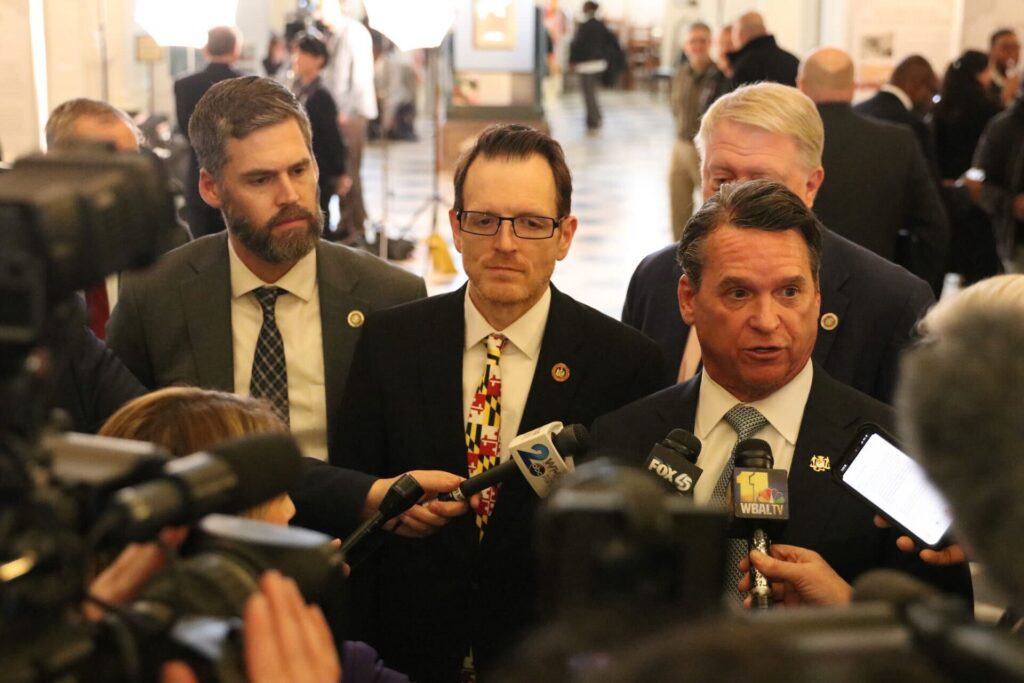
But Senate Minority Leader Stephen Hershey, R-Upper Shore, said Jeffries’ visit showed state Democrats are too focused on national political issues like redistricting rather than local ones.
“They want to hear about what we’re doing with respect to them, rather than to worry about being in the middle of some battle between Hakeem Jeffries and President Trump,” Hershey told reporters last month.
Eric Holder, a former U.S. Attorney General who now leads a national organization that pushes for Democratic redistricting, called on the Maryland Senate Democratic Caucus to sign a petition forcing a vote on the redistricting bill.
“I would encourage each Democratic member of the Maryland Senate to imagine waking up on Nov. 4 to news of an unfairly elected Republican majority in the House of Representatives, knowing that she or he did not do everything in their power to prevent it,” he wrote in The Baltimore Sun last week.
Capital News Service reporter Rhiannon Evans contributed to this story.
You must be logged in to post a comment.